
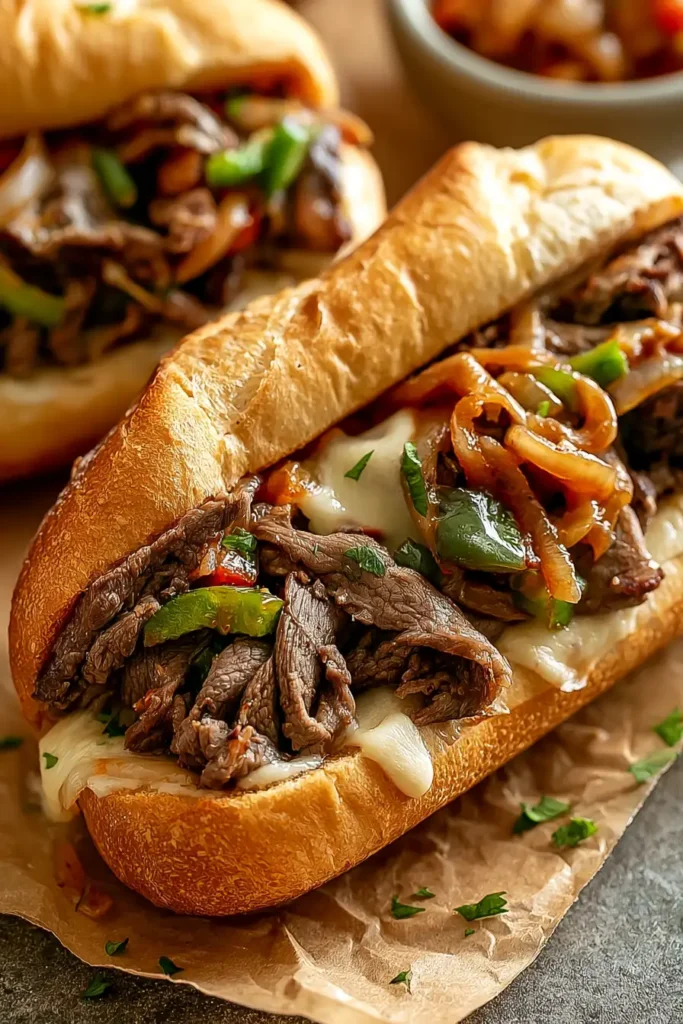
A Philly Cheesesteak is the kind of sandwich that makes an ordinary lunch feel special. Made with thinly sliced ribeye steak, sweet sautéed onions, green bell peppers, and melted provolone cheese, this classic sandwich delivers a delicious combination of savory beef, tender vegetables, and gooey cheese in every bite. Everything is tucked inside a lightly toasted hoagie roll for a satisfying sandwich with plenty of flavor and texture.

The best part about making a Philly Cheesesteak at home is how simple the process can be. You only need a handful of everyday ingredients and one skillet to bring everything together. The steak cooks quickly, the vegetables become beautifully tender, and the provolone melts over the warm filling. Serve these sandwiches for lunch, dinner, or a casual weekend meal when you’re craving something hearty and delicious.
Why You’ll Love This Philly Cheesesteak Recipe
- Packed with flavor: Ribeye steak, Worcestershire sauce, garlic powder, and black pepper create a rich, savory filling.
- Tender and juicy steak: Thinly sliced ribeye cooks quickly and stays deliciously tender when prepared properly.
- Melted provolone cheese: Provolone adds a creamy, mild flavor that complements the beef and vegetables.
- Easy to make: You can prepare the filling using a single skillet without complicated cooking techniques.
- Perfect for any occasion: These sandwiches work wonderfully for family dinners, weekend lunches, game days, and casual gatherings.
- Easy to customize: Adjust the vegetables, cheese, and seasonings to suit your preferences without losing the classic cheesesteak character.
Preparation and Tools
Before cooking, take a few minutes to prepare your ingredients. Since the steak cooks quickly, having everything sliced, measured, and ready makes the process much easier.
Essential equipment:
- Large skillet or frying pan: Provides enough room to cook the steak and vegetables without overcrowding.
- Sharp knife: Useful for slicing the ribeye, onion, and green bell pepper into thin pieces.
- Cutting board: Keeps ingredient preparation organized.
- Spatula or cooking tongs: Helps turn and separate the steak while cooking.
- Small plate: Useful for temporarily holding the cooked vegetables if you prefer to prepare them separately.
- Toaster or skillet: For lightly toasting the hoagie rolls.
Preparation checklist:
- Thinly slice the ribeye steak against the grain.
- Slice the yellow onion into thin strips.
- Remove the seeds and membranes from the green bell pepper, then slice it.
- Measure the olive oil, Worcestershire sauce, salt, black pepper, and optional garlic powder.
- Slice the provolone cheese if necessary and split the hoagie rolls.
Having everything ready before heating the skillet helps prevent overcooking the steak while you prepare the remaining ingredients.
Preparation Tips for the Best Philly Cheesesteak
A few small preparation details can make a noticeable difference in the finished sandwich.
Slice the steak against the grain.
This is one of the most important steps when preparing ribeye for cheesesteaks. Look for the direction of the muscle fibers and slice across them rather than following their length. Cutting against the grain creates shorter muscle fibers, making the steak easier to chew.
Make the steak slices thin.
Thin slices cook quickly and fit comfortably inside the hoagie rolls. If the ribeye is difficult to slice, briefly chilling it in the freezer can make it firmer and easier to cut. Avoid freezing it completely.
Keep the vegetables evenly sliced.
Thinly sliced onions and bell peppers cook more evenly and distribute nicely throughout the sandwich. Try to keep the pieces relatively similar in thickness.
Prepare the rolls before assembling.
Lightly toasted hoagie rolls provide a sturdier base for the warm steak filling. You can use a toaster or warm them in a skillet. For additional richness, spread the optional butter over the rolls before toasting.
Don’t overcrowd the skillet.
The steak needs enough room to cook properly. If your skillet is too crowded, the meat may release moisture and steam instead of developing the desired cooked surface. Work in batches if necessary.
Ingredients for Philly Cheesesteak
The recipe makes 4 hearty sandwiches.
The ingredient list is straightforward, but each component contributes something important to the final flavor.
Ribeye steak: The star of the sandwich is 1 ½ pounds (680 g) of ribeye, thinly sliced against the grain. Ribeye is a flavorful cut with natural marbling that helps give the filling its rich taste and satisfying texture.
Olive oil: Two tablespoons of olive oil, divided, are used for cooking the ingredients. Dividing the oil allows you to cook the vegetables and steak separately if desired.
Yellow onion: One large thinly sliced yellow onion adds natural sweetness and savory flavor. As it cooks, it becomes tender and develops a mellow taste that pairs beautifully with the beef.
Green bell pepper: One green bell pepper contributes freshness, a slightly sweet flavor, and a little texture. It also gives the filling its familiar cheesesteak appearance.
Salt and black pepper: One teaspoon of salt, or to taste, and ½ teaspoon of black pepper season the steak and vegetables.
Garlic powder: The optional ½ teaspoon of garlic powder adds another layer of savory flavor. It is not essential, but it works nicely with the beef.
Worcestershire sauce: One tablespoon brings a savory, slightly tangy depth to the steak. Its concentrated flavor helps make the filling taste especially satisfying.
Provolone cheese: Eight slices of provolone, or approximately 1 ½ cups shredded, provide the creamy, melted cheese layer. Provolone has a mild flavor that complements rather than overwhelms the ribeye.
Hoagie rolls: Four split hoagie rolls hold all the ingredients. Choose rolls that are sturdy enough to support the warm filling.
Butter: One tablespoon of butter is optional and can be used for the rolls before lightly toasting them.
How to Make Philly Cheesesteak
Step 1: Prepare the Steak and Vegetables
Begin by thinly slicing the ribeye steak against the grain. Remove any particularly large pieces of excess fat, while keeping the natural marbling that gives ribeye its flavor.
Next, thinly slice the yellow onion and green bell pepper. Keep the vegetables separate from the steak so they’re easy to add to the skillet.
Measure the seasonings and Worcestershire sauce, and have the provolone cheese and hoagie rolls ready for assembly.
Step 2: Cook the Onions and Bell Peppers
Heat a large skillet over medium heat and add part of the olive oil.
Add the sliced onion and green bell pepper. Cook, stirring occasionally, until the vegetables soften and the onion becomes translucent.
The vegetables should be tender but still hold their shape. Avoid cooking them until they become overly mushy.
Once cooked, transfer the vegetables to a plate and set them aside.
Step 3: Cook the Ribeye Steak
Add the remaining olive oil to the same skillet.
Place the thinly sliced ribeye into the skillet, spreading it out as much as possible. If necessary, cook the steak in batches to avoid overcrowding.
Season with salt, black pepper, and the optional garlic powder. Use a spatula or tongs to separate the slices and turn the meat so it cooks evenly.
Once the steak is cooked to your preferred doneness, add the Worcestershire sauce and stir to coat the meat.
The steak should be tender and flavorful, with no raw-looking areas remaining.
Step 4: Combine the Steak and Vegetables
Return the cooked onions and green bell peppers to the skillet with the steak.
Stir everything together so the vegetables are evenly distributed throughout the beef. Allow the ingredients to warm together briefly so their flavors combine.
Taste the filling and adjust the seasoning with additional salt if needed.
Step 5: Melt the Provolone Cheese
Arrange the steak and vegetable mixture into four portions in the skillet.
Place two slices of provolone over each portion, or distribute the shredded provolone evenly.
Allow the cheese to melt over the warm filling. You can briefly cover the skillet to help the cheese melt more evenly.
Once the provolone becomes soft and creamy, the filling is ready for the rolls.
Step 6: Toast the Hoagie Rolls and Assemble
Split the four hoagie rolls if they aren’t already cut.
If desired, spread the optional butter over the inside of each roll. Lightly toast them until warm with a slightly crisp surface.
Carefully transfer one portion of the steak, onion, pepper, and melted cheese mixture into each roll.
Serve the Philly Cheesesteaks while they’re warm and the provolone is still melted.
Notes for Making the Best Sandwiches
- Choose good-quality ribeye: The natural marbling helps create a flavorful filling. Slice it thinly for the best sandwich texture.
- Adjust the cheese: Provolone is a delicious choice, but you can use the shredded or sliced version depending on what you have available.
- Make the filling in batches: If your skillet is small, cooking the steak in multiple batches helps prevent overcrowding.
- Control the vegetable texture: Cook the onions and peppers until tender, but avoid letting them become too soft.
- Serve immediately: Philly Cheesesteaks are best assembled just before serving while the steak is warm and the cheese is melted.
Common Mistakes to Avoid
1. Cutting the steak too thick
Thick pieces of ribeye can make the sandwich difficult to bite through. Slice the meat thinly against the grain so it cooks quickly and fits comfortably inside the rolls.
2. Overcrowding the skillet
Adding too much steak at once can cause the meat to steam rather than cook evenly. Use a sufficiently large skillet or prepare the steak in batches.
3. Overcooking the vegetables
Onions and bell peppers should become tender without losing all their texture. Stir occasionally and remove them once they reach the desired softness.
4. Forgetting to season the steak
Ribeye has plenty of natural flavor, but salt, black pepper, and Worcestershire sauce help bring out its savory qualities. Season the meat during cooking rather than relying entirely on the finished sandwich.
5. Using soft, untoasted rolls
Very soft rolls can become difficult to handle once filled with warm steak and melted cheese. Lightly toasting the hoagie rolls helps them hold their shape and adds a pleasant texture.
6. Letting the assembled sandwiches sit too long
The cheese is at its best when freshly melted, and the rolls are more enjoyable when freshly toasted. Assemble the sandwiches shortly before serving for the best texture.
What to Serve With Philly Cheesesteak
A Philly Cheesesteak is hearty enough to enjoy on its own, but pairing it with a simple side dish makes it even better. Since the sandwich is rich with ribeye, melted provolone, and sautéed vegetables, fresh or crispy sides work especially well.
Here are some delicious serving ideas:
1. Crispy French Fries
French fries are a classic companion for cheesesteak sandwiches. Their golden, crispy texture contrasts nicely with the tender steak and melted cheese. Serve them with ketchup, mayonnaise, or your favorite dipping sauce.
2. Coleslaw
A bowl of creamy coleslaw adds a refreshing contrast to the warm, savory sandwich. The crunchy cabbage and slightly tangy dressing help balance the richness of the beef and cheese.
3. Onion Rings
Golden onion rings are another excellent option. Their crispy coating and sweet onion flavor complement the sautéed onions already inside the sandwich.
4. Simple Garden Salad
If you prefer something lighter, serve the cheesesteak with a fresh salad made with lettuce, tomatoes, cucumbers, and your favorite dressing. It adds freshness without competing with the sandwich’s flavors.
5. Pickles
Dill pickle slices are an easy addition that brings a pleasant tangy flavor. Serve them alongside the sandwich or add a few slices to the plate.
Storage Instructions
Philly Cheesesteaks are best enjoyed immediately after assembly, but you can save leftover filling for another meal.
Refrigerating leftover filling
Allow the cooked steak and vegetable mixture to cool before transferring it to an airtight container. Refrigerate within two hours of cooking.
Store the filling in the refrigerator for up to 3–4 days. For the best texture, keep the filling separate from the hoagie rolls and assemble the sandwiches when you’re ready to eat.
Freezing the filling
You can freeze the cooked steak and vegetable mixture if you want to prepare it ahead of time.
Transfer the cooled filling into a freezer-safe airtight container or freezer bag. Divide it into individual portions if you want to make reheating easier.
Freeze for up to 2–3 months for best quality. Thaw overnight in the refrigerator before reheating.
Reheating instructions
For the best results, reheat the filling in a skillet over medium-low heat until thoroughly heated. Stir occasionally to distribute the heat evenly.
If the filling seems dry, avoid adding extra ingredients not included in the original recipe; instead, keep the heat moderate and stir as needed.
You can also reheat individual portions in the microwave using a microwave-safe dish. Cover loosely and heat in short intervals, stirring between intervals.
Toast fresh hoagie rolls separately and assemble the sandwiches just before serving.
Make-ahead tips
You can slice the ribeye, onion, and green bell pepper ahead of time and store them separately in airtight containers in the refrigerator.
You can also cook the steak and vegetables in advance, refrigerate the filling, and reheat it when needed. For the freshest sandwich, toast the rolls and melt the cheese during final assembly.
Estimated Nutrition
The following nutritional information is estimated based on the listed ingredients and four sandwiches.
Estimated values per sandwich; actual nutrition will vary depending on the ribeye, cheese, and hoagie rolls used.
| Nutrient | Estimated Amount |
|---|---|
| Calories | 850 kcal |
| Protein | 53 g |
| Carbohydrates | 47 g |
| Fat | 48 g |
| Saturated Fat | 20 g |
| Fiber | 3 g |
| Sugar | 7 g |
| Sodium | 1,250 mg |
Frequently Asked Questions
What is the best cut of beef for Philly Cheesesteak?
Ribeye is an excellent choice because it has natural marbling that contributes rich flavor and tenderness. It also cooks quickly when sliced thinly against the grain. This recipe uses ribeye, making it a great option for a flavorful homemade cheesesteak.
Can I use shredded provolone instead of slices?
Yes! The recipe works with either eight slices of provolone or approximately 1 ½ cups of shredded provolone. Both options melt nicely over the hot steak and vegetables. Use whichever is more convenient.
Do I have to use green bell peppers?
No. Green bell peppers are included in this recipe, but you can leave them out if you prefer a sandwich focused on steak, onions, and cheese. Keep the other ingredients and cooking instructions the same.
How do I keep my Philly Cheesesteak from becoming soggy?
Start with lightly toasted hoagie rolls and avoid assembling the sandwiches too far in advance. It’s also important not to overcrowd the skillet when cooking the steak, since excess moisture can affect the texture of the filling.
Can I prepare Philly Cheesesteak ahead of time?
Yes. You can slice the steak and vegetables in advance or prepare the complete filling and refrigerate it. Reheat the filling in a skillet when ready to serve, then add the melted cheese and assemble the sandwiches with freshly toasted rolls.
What cheese is traditionally used in Philly Cheesesteak?
Provolone is a popular choice for its mild flavor and smooth melting texture. American cheese and Cheez Whiz are also associated with Philadelphia-style cheesesteaks, but this recipe specifically uses provolone.
Conclusion
This Philly Cheesesteak recipe brings together everything that makes a great steak sandwich: tender ribeye, sweet sautéed onions, green bell peppers, and plenty of melted provolone cheese. Served inside lightly toasted hoagie rolls, each sandwich makes a satisfying lunch or dinner.
With simple ingredients and an easy skillet preparation, it’s a delicious meal to add to your regular rotation. Serve it with crispy fries, a fresh salad, or your favorite side, and enjoy a homemade cheesesteak whenever the craving strikes.
Print
Philly Cheesesteak Recipe
- Total Time: 35 minutes
- Yield: 4 sandwiches 1x
Description
This Philly Cheesesteak recipe features thinly sliced ribeye steak, sautéed onions, green bell peppers, and melted provolone cheese tucked inside lightly toasted hoagie rolls. A hearty, flavorful sandwich that’s perfect for lunch or dinner.
Ingredients
- 1 ½ lb (680 g) ribeye steak, thinly sliced against the grain
- 2 tablespoons olive oil (divided)
- 1 large yellow onion (thinly sliced)
- 1 green bell pepper (thinly sliced)
- 1 teaspoon salt (or to taste)
- ½ teaspoon black pepper
- ½ teaspoon garlic powder (optional)
- 1 tablespoon Worcestershire sauce
- 8 slices provolone cheese (or 1 ½ cups shredded)
- 4 hoagie rolls (split and lightly toasted)
- 1 tablespoon butter (for the rolls, optional)
Instructions
- Thinly slice the ribeye steak against the grain. Thinly slice the yellow onion and green bell pepper. Prepare the remaining ingredients.
- Heat part of the olive oil in a large skillet over medium heat. Add the sliced onion and green bell pepper. Cook, stirring occasionally, until softened and the onion becomes translucent. Transfer the vegetables to a plate.
- Add the remaining olive oil to the same skillet. Add the sliced ribeye, spreading it out as much as possible. Cook in batches if necessary to avoid overcrowding.
- Season the steak with salt, black pepper, and optional garlic powder. Cook, turning and separating the slices until cooked to your preferred doneness. Add the Worcestershire sauce and stir to coat.
- Return the cooked onions and green bell peppers to the skillet. Stir everything together and allow the mixture to warm briefly. Taste and adjust the salt if needed.
- Divide the steak and vegetable mixture into four portions in the skillet. Top each portion with two slices of provolone or an even amount of shredded cheese. Allow the cheese to melt over the filling. Cover the skillet briefly if needed.
- Split the hoagie rolls. If desired, spread the optional butter over the inside of each roll. Lightly toast until warm with a slightly crisp surface.
- Transfer one portion of the steak, vegetable, and melted cheese mixture into each toasted hoagie roll. Serve immediately while warm.
Notes
- Slice the ribeye thinly against the grain for tender, easy-to-eat sandwiches.
- Cook the steak in batches if necessary to prevent overcrowding the skillet.
- Keep the filling separate from the rolls when storing leftovers to prevent sogginess.
- Prep Time: 15 minutes
- Cook Time: 20 minutes
- Category: Recipes
- Method: Stovetop
- Cuisine: American
Nutrition
- Serving Size: 1 sandwich
- Calories: 850 kcal
- Sugar: 7 g
- Sodium: 1,250 mg
- Fat: 48 g
- Saturated Fat: 20 g
- Unsaturated Fat: 25 g
- Trans Fat: 1 g
- Carbohydrates: 47 g
- Fiber: 3 g
- Protein: 53 g
- Cholesterol: 160 mg
Keywords: Philly Cheesesteak Recipe, homemade Philly cheesesteak, ribeye steak sandwich, steak and cheese sandwich, provolone cheesesteak, easy cheesesteak recipe
Leave a Comment