
Korean Style Pot Roast brings together the comforting tenderness of a traditional beef pot roast and the bold, savory-sweet flavors of Korean cooking. Chuck roast is slowly braised with gochujang, garlic, fresh ginger, soy sauce, brown sugar, and beef stock until the meat becomes fork-tender and absorbs the rich, deeply seasoned cooking liquid.
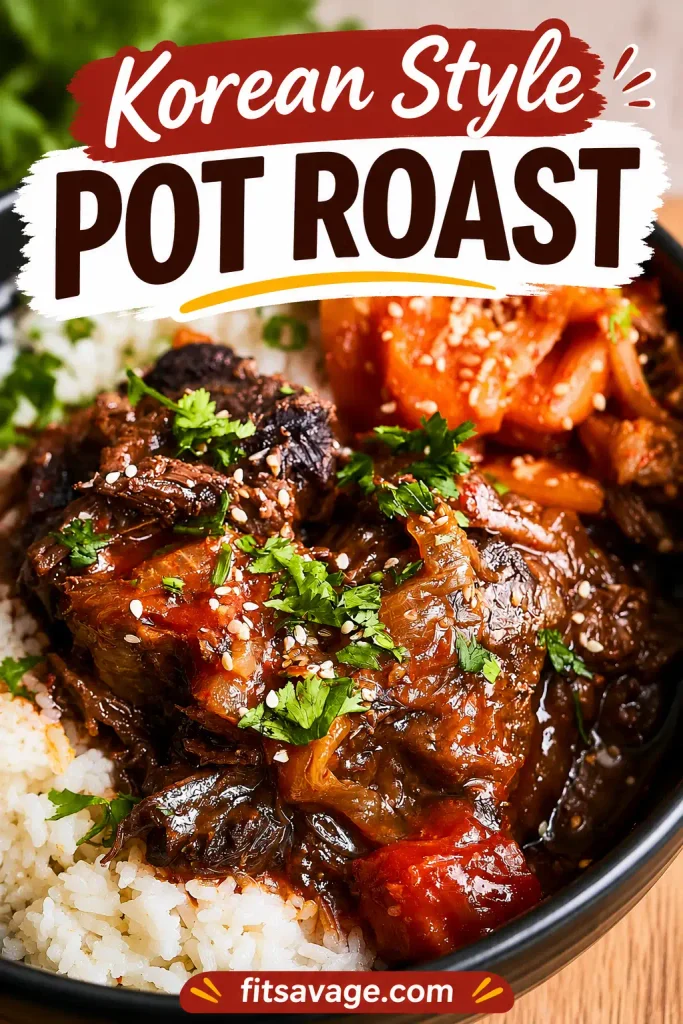
Served over warm rice with fresh cilantro and kimchi, this dish makes a satisfying dinner with plenty of flavor in every bite. The gochujang adds gentle heat and a distinctive Korean-inspired depth, while brown sugar balances the saltiness of the soy sauce. As the beef cooks, the onions soften into the sauce, creating a delicious combination that works beautifully with steamed rice.
Why You’ll Love This Korean Style Pot Roast
- Rich Korean-inspired flavors: Gochujang, ginger, garlic, and soy sauce create a savory, slightly sweet, and pleasantly spicy sauce.
- Tender, slow-cooked beef: Chuck roast becomes wonderfully tender as it slowly braises in the flavorful cooking liquid.
- A satisfying one-pot main dish: The beef, onions, and braising liquid develop together, making this a convenient dinner centerpiece.
- Easy to customize: You can adjust the amount of gochujang in your serving or pair the beef with different rice and vegetable sides.
- Excellent for leftovers: The flavors continue to come together as the beef rests in its sauce, making leftovers especially enjoyable.
Preparation and Tools
This recipe uses straightforward ingredients and a few basic kitchen tools. The most important part is choosing a cooking vessel that can comfortably hold the beef and braising liquid.
Essential equipment:
- A large Dutch oven or heavy-bottomed pot with a lid
- A sharp knife and cutting board
- Measuring spoons and measuring cups
- A wooden spoon or heat-resistant spatula
- A grater for the fresh ginger
- Tongs for handling the beef
Before cooking, cut the chuck roast into approximately 3-inch pieces. Keeping the pieces relatively similar in size helps them cook more evenly.
Thinly slice the sweet onion, finely chop the garlic, and grate the fresh ginger. Measure the gochujang, brown sugar, soy sauce, and beef stock so everything is ready when you begin cooking.
Preparation Tips for the Best Results
Choose chuck roast for tenderness. Chuck roast is particularly suitable for slow braising because its connective tissue gradually softens during cooking. This produces beef that is tender rather than dry or chewy.
Cut the beef into similar-sized pieces. The recipe calls for 3-inch pieces. Try to keep them reasonably consistent so smaller pieces do not become tender significantly earlier than larger ones.
Use fresh ginger and garlic. Fresh aromatics bring a fragrant flavor to the braising liquid. Finely chopping the garlic and grating the ginger also helps distribute their flavor throughout the sauce.
Understand your gochujang. Gochujang is a Korean fermented chili paste with a combination of heat, sweetness, and savory depth. Different brands vary in intensity, so consider the particular paste you are using when deciding how spicy you want the finished dish to taste.
Choose soy sauce or tamari. Low-sodium soy sauce provides savory seasoning without making the braising liquid overly salty. Tamari is an alternative listed in the recipe. Check its label if you need a gluten-free option.
Prepare the serving ingredients ahead of time. Cooked rice, cilantro, and kimchi are listed for serving. Having them ready makes assembling dinner much easier once the beef is tender.
Ingredients You’ll Need
The ingredient list is relatively short, but each component contributes something important to the finished pot roast.
Chuck roast: One 4- to 5-pound chuck roast provides the rich beef flavor and tender texture that make this dish satisfying. Cutting it into 3-inch pieces allows the braising liquid to surround the meat.
Kosher salt: Salt seasons the beef before cooking and helps bring out its natural flavor.
Vegetable oil: A tablespoon of vegetable oil provides the fat needed to begin cooking the beef and aromatics.
Sweet onion: Thinly sliced sweet onion softens during cooking and adds a mild sweetness to the savory sauce.
Garlic and fresh ginger: These aromatics provide the unmistakable fragrance and warmth that complement the Korean-inspired seasoning.
Gochujang paste: This fermented Korean chili paste gives the sauce its characteristic color, gentle heat, and complex savory flavor.
Brown sugar: Brown sugar balances the saltiness of the soy sauce and the heat of the gochujang, creating a rounded sweet-and-savory taste.
Low-sodium soy sauce or tamari: This provides the salty, umami-rich foundation of the braising liquid.
Beef stock: Two cups of beef stock provide the liquid needed to braise the chuck roast while adding another layer of beef flavor.
Serving ingredients: Cooked rice, fresh cilantro, and kimchi complete the meal. The rice absorbs the sauce, cilantro adds freshness, and kimchi provides a tangy, fermented contrast.
How to Make Korean Style Pot Roast
Step 1: Prepare and Season the Beef
Cut the chuck roast into approximately 3-inch pieces if it has not already been prepared. Pat the pieces dry with paper towels to remove excess surface moisture.
Season the beef evenly with the kosher salt, making sure the pieces are coated on all sides.
Preparing the beef before heating the pot helps keep the cooking process organized and ensures that the seasoning is distributed throughout the meat.
Step 2: Heat the Oil and Brown the Beef
Place a large Dutch oven or heavy-bottomed pot over medium-high heat. Add the vegetable oil and allow it to heat.
Working in batches if necessary, add the beef pieces and brown them on the available sides. Avoid overcrowding the pot, as too much beef at once can cause the meat to steam rather than develop a browned exterior.
Once browned, transfer the beef to a plate temporarily.
Browning adds a deeper roasted flavor to the finished dish and creates flavorful browned bits on the bottom of the pot.
Step 3: Cook the Onion, Garlic, and Ginger
Add the thinly sliced sweet onion to the same pot. Cook, stirring occasionally, until the onion begins to soften.
Add the finely chopped garlic and grated fresh ginger. Stir to combine and allow the aromatics to become fragrant.
Scrape the bottom of the pot as needed to loosen the browned bits left from cooking the beef. These flavorful bits help build the foundation of the sauce.
Step 4: Build the Korean-Inspired Braising Sauce
Add the gochujang paste and brown sugar to the onion mixture. Stir until the ingredients are incorporated.
Pour in the low-sodium soy sauce or tamari and beef stock. Stir thoroughly, making sure the gochujang is distributed throughout the liquid rather than remaining in concentrated pockets.
The sauce should have a rich reddish-brown appearance, with the sweetness of the brown sugar balancing the savory soy sauce and chili paste.
Step 5: Return the Beef and Braise
Return the browned beef pieces to the pot, arranging them in the braising liquid.
Bring the liquid to a gentle simmer, then cover the pot with its lid. Allow the beef to cook slowly until it becomes fork-tender.
Check the meat periodically and maintain a gentle simmer rather than a vigorous boil. The beef should gradually soften as it absorbs the flavors of the sauce.
The exact cooking time will depend on the size of the pieces and your cooking equipment. Look for beef that yields easily when pierced with a fork.
Step 6: Serve with Rice, Cilantro, and Kimchi
Once the beef is tender, prepare the cooked rice for serving.
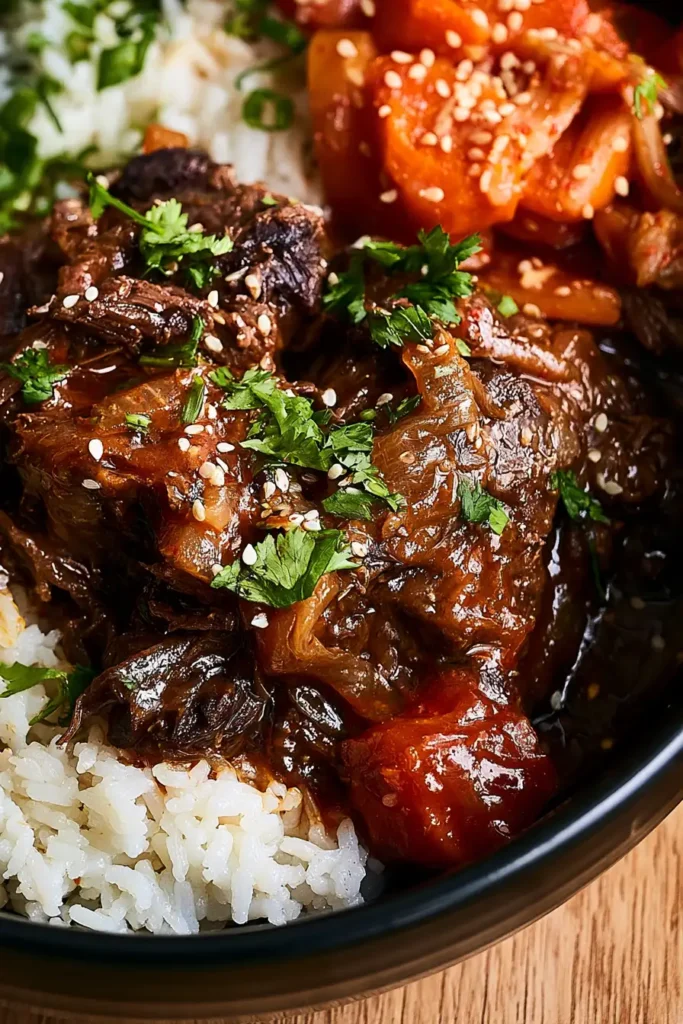
Spoon the rice into serving bowls and arrange the Korean Style Pot Roast over the top. Add some of the flavorful braising liquid and softened onions so the rice can absorb the sauce.
Finish with fresh cilantro and serve with kimchi on the side.
The combination of tender beef, savory-sweet sauce, fresh herbs, and tangy kimchi creates a balanced and satisfying meal.
Recipe Notes
- Adjust the heat: Gochujang varies by brand. The supplied amount gives the dish its signature Korean-inspired flavor, but individual servings can be paired with more or less sauce depending on spice preference.
- Keep the beef in the sauce: If preparing the dish ahead, store the beef with some of its braising liquid to help maintain moisture.
- Choose a suitable pot: A Dutch oven or heavy-bottomed pot with a tight-fitting lid helps maintain consistent heat during braising.
Common Mistakes to Avoid
Overcrowding the pot when browning: Adding all the beef at once can lower the temperature and prevent proper browning. Work in batches so the pieces have enough room.
Cutting the beef too small: The recipe calls for approximately 3-inch pieces. Much smaller pieces may soften too quickly and lose their structure during extended braising.
Cooking at too high a temperature: A vigorous boil can make it harder to achieve evenly tender beef. Maintain a gentle simmer while the pot is covered.
Not distributing the gochujang properly: Gochujang is thick, so stir it thoroughly into the soy sauce and beef stock. This helps create an evenly flavored braising liquid.
Rushing the braising process: Chuck roast needs sufficient time for its connective tissue to soften. Use fork tenderness rather than appearance alone to determine when the beef is ready.
Forgetting the serving accompaniments: Rice, cilantro, and kimchi each contribute something different. Together, they balance the richness of the beef and make the meal feel complete.
What to Serve With Korean Style Pot Roast
Korean Style Pot Roast has a rich, savory-sweet sauce with a little heat, so it pairs especially well with simple sides that complement its bold flavors without competing with them.
Here are some delicious serving ideas:
1. Steamed White Rice
Steamed white rice is the natural choice for this dish. Its mild flavor balances the gochujang and soy sauce, while the tender grains soak up the flavorful braising liquid. Jasmine rice or short-grain rice both work well.
2. Kimchi
Kimchi adds a tangy, fermented flavor that cuts through the richness of the beef. Its crisp texture also provides a pleasant contrast to the soft, slow-braised meat.
3. Steamed Vegetables
Broccoli, green beans, or bok choy make excellent vegetable sides. Their fresh flavors complement the beef and add variety to the meal.
4. Cucumber Salad
A simple Korean-inspired cucumber salad provides a refreshing contrast to the warm, rich pot roast. Thinly sliced cucumber with a lightly seasoned dressing can help balance the sweetness and spice of the sauce.
5. Roasted or Steamed Carrots
Carrots bring natural sweetness and a tender texture that work nicely with the savory braising liquid. Serve them alongside the beef for an easy vegetable addition.
Storage Instructions
Korean Style Pot Roast is a convenient make-ahead dinner because the cooked beef can be stored with its flavorful sauce and reheated when needed.
Refrigeration: Allow the leftovers to cool slightly, then transfer the beef and braising liquid into an airtight container. Refrigerate within two hours of cooking. Properly refrigerated cooked beef should be enjoyed within 3 to 4 days.
Keeping the meat in the sauce helps prevent it from drying out during storage.
Freezing: For longer storage, place the cooled beef and some of its sauce in freezer-safe containers or bags. Remove excess air, seal tightly, and freeze for approximately 2 to 3 months for best quality.
If freezing individual portions, divide the beef into meal-sized servings before storing. This makes reheating easier and avoids thawing more than you need.
Reheating: Thaw frozen portions in the refrigerator overnight. Transfer the beef and sauce to a covered saucepan and warm gently over medium-low heat until heated through. Stir occasionally and avoid letting the sauce boil aggressively.
You can also reheat individual portions in the microwave using a microwave-safe container. Cover loosely, heat in intervals, and stir between intervals to distribute the heat evenly.
For food safety, reheat leftovers to an internal temperature of 165°F (74°C).
Make-Ahead Preparation: You can prepare the pot roast ahead of time and refrigerate it with the sauce. When ready to serve, reheat gently and prepare fresh rice, cilantro, and kimchi. This keeps the accompaniments fresh while making dinner preparation much easier.
Estimated Nutrition
The following nutrition information is an estimate based on the listed ingredients and an assumed serving size. Actual values will vary depending on the chuck roast’s fat content, the specific gochujang and soy sauce used, the amount of sauce served, and the final number of portions.
Estimated nutrition per serving
520 kcal
Approximate estimate, assuming 8 servings of beef and sauce, excluding rice and optional garnishes.
38 g
Protein
36 g
Fat
11 g
Carbohydrates
7 g
Sugar
These values are approximate and are not laboratory-verified.
Frequently Asked Questions
1. Is Korean Style Pot Roast spicy?
It has a mild to moderate heat from the gochujang paste. Gochujang also contributes sweetness and savory fermented flavor, so the finished dish is not simply hot. The overall intensity depends on the brand of paste you use.
2. Can I make Korean Style Pot Roast ahead of time?
Yes. You can prepare the entire dish ahead and refrigerate the beef in its braising sauce. Reheat it gently before serving and prepare fresh rice and garnishes. This is a convenient option for busy evenings or meal preparation.
3. What cut of beef works best for this recipe?
Chuck roast is the recommended cut because it contains connective tissue and marbling that make it particularly suitable for slow braising. As it cooks, the meat gradually becomes tender and develops a rich texture.
4. Can I use tamari instead of soy sauce?
Yes. The recipe specifically allows low-sodium soy sauce or tamari. Both contribute savory, umami-rich flavor to the braising liquid. If gluten avoidance is important, check the tamari packaging to confirm that it is certified gluten-free.
5. How do I know when the beef is done?
The beef should be fork-tender. Insert a fork into one of the larger pieces and gently twist. If the meat yields easily, it is ready. If it still feels firm or resists the fork, it needs more braising time.
6. Can I freeze the leftover pot roast?
Yes. Freeze the cooled beef with some of its sauce in airtight, freezer-safe containers. For the best quality, use it within 2 to 3 months. Thaw overnight in the refrigerator before reheating.
A Comforting Dinner with Korean-Inspired Flavor
Korean Style Pot Roast is a satisfying way to bring bold, savory-sweet flavors to a familiar comfort-food favorite. Tender chuck roast, fragrant garlic and ginger, gochujang, and a rich soy-based sauce come together to create a meal that pairs beautifully with rice and kimchi.
Prepare it ahead for an easier dinner, serve it family-style, or portion the leftovers for another meal. With its tender beef and flavorful sauce, this pot roast is a delicious addition to your dinner rotation.
Print
Korean Style Pot Roast
- Total Time: 3 hours 20 minutes
- Yield: 8 servings 1x
Description
This Korean Style Pot Roast features tender chuck roast slowly braised with gochujang, garlic, fresh ginger, soy sauce, and brown sugar. Served over rice with fresh cilantro and kimchi, it’s a comforting dinner packed with savory-sweet Korean-inspired flavors.
Ingredients
- 1 (4 to 5-pound) chuck roast, cut into 3-inch pieces
- 1 tablespoon kosher salt
- 1 tablespoon vegetable oil
- 1 sweet onion, thinly sliced
- 6 garlic cloves, finely chopped
- 1 tablespoon grated fresh ginger
- 2 tablespoons gochujang paste
- ¼ cup brown sugar
- ½ cup low-sodium soy sauce or tamari
- 2 cups beef stock
- Cooked rice, for serving
- Fresh cilantro, for serving
- Kimchi, for serving
Instructions
- Cut the chuck roast into approximately 3-inch pieces if necessary. Pat the beef dry and season evenly with kosher salt.
- Heat the vegetable oil in a large Dutch oven or heavy-bottomed pot over medium-high heat. Brown the beef pieces in batches, avoiding overcrowding. Transfer the browned beef to a plate.
- Add the sliced sweet onion to the same pot and cook until it begins to soften.
- Add the chopped garlic and grated fresh ginger. Stir until fragrant, scraping up any browned bits from the bottom of the pot.
- Add the gochujang paste and brown sugar. Stir to combine.
- Pour in the low-sodium soy sauce or tamari and beef stock. Stir until the gochujang is evenly incorporated into the liquid.
- Return the browned beef to the pot, arranging the pieces in the braising liquid.
- Bring the liquid to a gentle simmer. Cover the pot and cook slowly until the beef is fork-tender. Maintain a gentle simmer and check the beef periodically. Cooking time will depend on the size of the pieces and cooking equipment.
- Serve the tender beef over cooked rice with some of the braising liquid and softened onions.
- Garnish with fresh cilantro and serve with kimchi on the side.
Notes
- Brown the beef in batches to develop a flavorful exterior without overcrowding the pot.
- Gochujang brands vary in heat, so the finished dish may have slightly different levels of spiciness.
- Store leftover beef with its braising sauce to help maintain moisture when reheating.
- Prep Time: 20 minutes
- Cook Time: 3 hours
- Category: Recipes
- Method: Stovetop
- Cuisine: Korean-Inspired
Nutrition
- Serving Size: 1/8
- Calories: 520 kcal
- Sugar: 7 g
- Sodium: 1,050 mg
- Fat: 36 g
- Saturated Fat: 14 g
- Unsaturated Fat: 20 g
- Trans Fat: 1 g
- Carbohydrates: 11 g
- Fiber: 1 g
- Protein: 38 g
- Cholesterol: 140 mg
Keywords: Korean Style Pot Roast, Korean beef pot roast, gochujang beef, Korean braised beef, chuck roast recipe, Korean-inspired dinner
Leave a Comment