
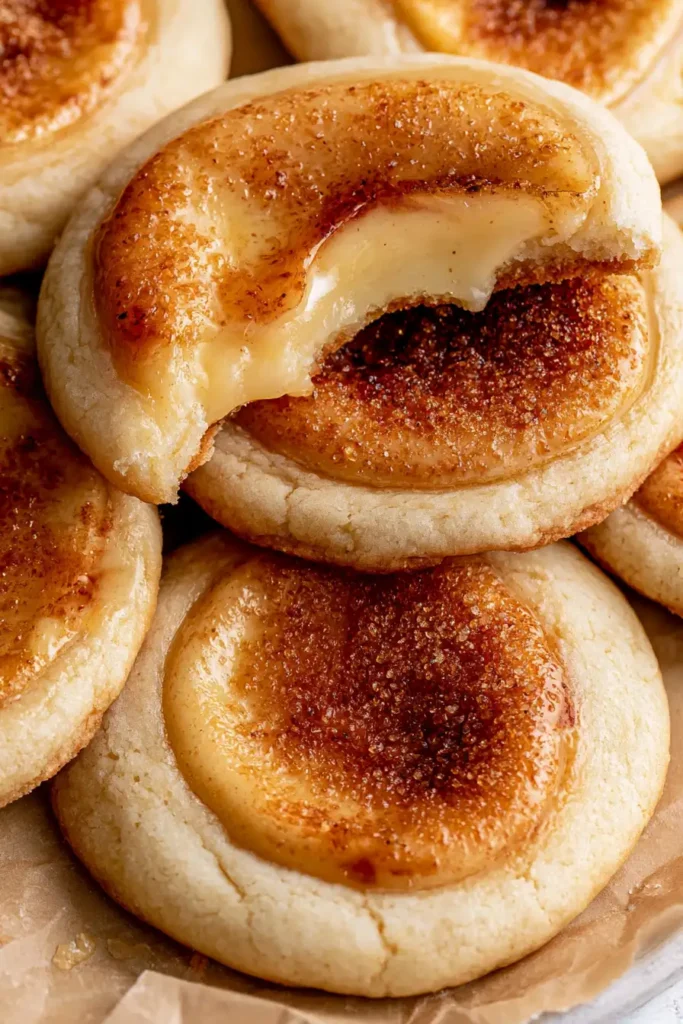
These Creme Brûlée Cookies bring together two irresistible desserts in one treat: soft, buttery sugar cookies and the rich, silky vanilla custard of classic crème brûlée. Each cookie features a creamy pastry cream center and a delicate, crackly caramelized sugar topping that adds the signature crunch of the French dessert.
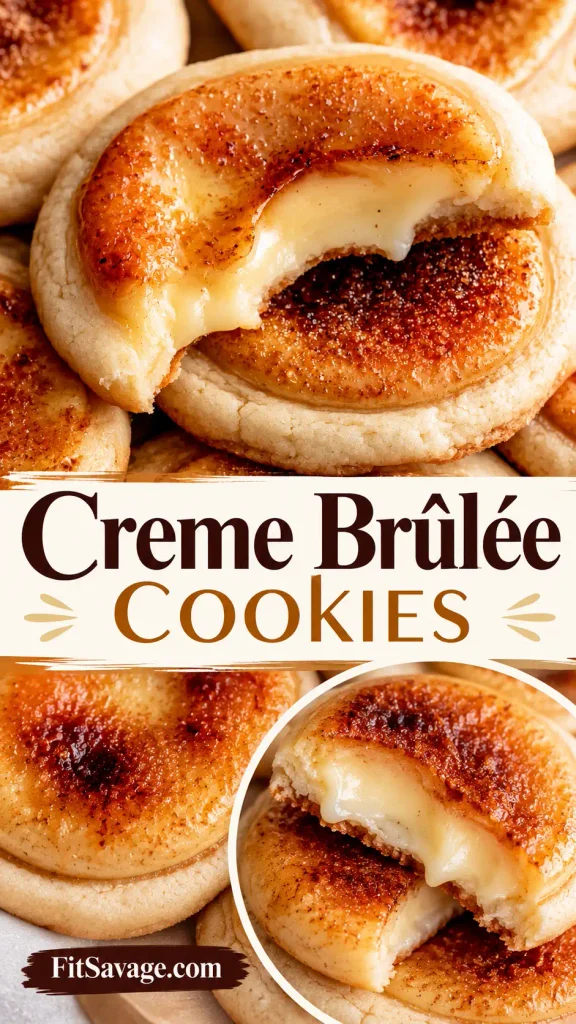
Made with vanilla bean paste for deep vanilla flavor, these cookies are an elegant choice for holiday cookie trays, dinner parties, special occasions, or whenever you want to make homemade cookies feel a little more special. The combination of tender cookie dough, smooth custard, and crisp brûlée sugar creates a delicious contrast of textures in every bite.
Why You’ll Love This Recipe
- Two desserts in one: Enjoy the familiar comfort of sugar cookies with the creamy filling and caramelized topping of crème brûlée.
- Rich vanilla flavor: Vanilla bean paste gives both the custard and the cookies a fragrant, full-bodied vanilla taste.
- A wonderful texture contrast: Soft cookies and silky pastry cream meet a thin, crunchy layer of caramelized sugar.
- Beautiful presentation: The glossy, golden brûlée topping makes these cookies look impressive enough for celebrations and dessert tables.
- Perfect for making ahead: The pastry cream can be prepared in advance, making it easier to assemble the cookies when you’re ready to serve them.
Preparation and Tools
These cookies have three components: vanilla pastry cream, sugar cookie dough, and the brûlée topping. Preparing the custard first gives it time to cool and thicken before you assemble the cookies.
You’ll need a medium saucepan, a heatproof mixing bowl, a whisk, a fine-mesh sieve if desired, measuring cups and spoons, a kitchen scale if available, a mixing bowl, an electric mixer, a baking sheet, parchment paper, and a spatula.
A small cookie scoop helps portion the dough evenly. A piping bag or spoon makes filling the cookies easier, while a kitchen torch is the most practical tool for caramelizing the sugar topping. If you don’t own a torch, a broiler may be an option, but it requires close attention because the cookies and custard can heat up quickly.
Preparation Tips
Prepare the pastry cream first. Custard needs time to cool and set. Making it ahead prevents warm filling from softening the cookie dough or making assembly difficult.
Measure the cornstarch carefully. It thickens the custard, helping it hold its shape rather than running out of the cookies. Too little can leave the filling loose, while too much may produce a pasty texture.
Use softened butter for the cookie dough. The butter should give slightly when pressed but should not be melted or greasy. Butter that’s too warm can make the dough overly soft and difficult to handle.
Spoon and level the flour. Scooping directly from the bag can pack too much flour into a measuring cup, resulting in dense cookies. Weighing the flour is a reliable alternative.
Keep the caramel topping thin. An even layer of granulated sugar creates a delicate, crisp shell. Thick or uneven patches can caramelize inconsistently.
Plan the finishing step around serving time. The brûlée topping is at its best shortly after caramelization, when the sugar is crisp and the contrast with the creamy filling is most noticeable.
Ingredients for Creme Brûlée Cookies
For the Vanilla Pastry Cream
- Whole milk: The base of the custard, providing a creamy consistency and mellow dairy flavor.
- Egg yolks: Add richness and help the custard develop its smooth texture.
- Granulated white sugar: Sweetens the filling and balances the vanilla.
- Salt: Enhances the flavor without making the custard taste salty.
- Vanilla bean paste: Provides concentrated vanilla flavor and the characteristic appearance of vanilla specks.
- Cornstarch: Thickens the pastry cream so it can be used as a cookie filling.
- Unsalted butter: Adds a smooth, rich finish to the cooked custard.
For the Sugar Cookies
- All-purpose flour: Provides the structure needed to support the custard filling.
- Baking powder: Gives the cookies some lift.
- Salt: Balances the sweetness and brings out the buttery flavor.
- Granulated white sugar: Sweetens the dough and contributes to the cookies’ texture.
- Unsalted butter: Creates a tender, buttery cookie.
- Egg: Binds the ingredients and helps the dough hold together.
- Vanilla bean paste: Reinforces the vanilla flavor in the cookie base.
- Sugar for rolling: Coats the dough before baking, adding sweetness and a lightly crisp exterior.
For the Brûlée Topping
– Granulated white sugar: Melts under the torch to create the thin, crunchy caramelized shell that defines these cookies.
How to Make Creme Brûlée Cookies
Step 1: Prepare the Vanilla Pastry Cream
Whisk the egg yolks, granulated sugar, salt, and cornstarch in a heatproof bowl until the mixture is smooth and evenly combined.
Heat the whole milk in a saucepan until hot but not boiling vigorously. Gradually whisk some of the hot milk into the egg mixture to temper the yolks. This raises their temperature gently and helps prevent them from scrambling.
Pour the tempered mixture back into the saucepan. Cook over medium heat, whisking continuously and scraping the bottom and corners of the pan to prevent sticking.
Continue cooking until the custard thickens and develops a smooth, pudding-like consistency. Once it has thickened, remove the saucepan from the heat and stir in the vanilla bean paste and cubed unsalted butter until fully incorporated.
Transfer the pastry cream to a clean bowl. Press plastic wrap directly against the surface to prevent a skin from forming, then refrigerate until completely chilled and firm enough to use as a filling.
Step 2: Make the Sugar Cookie Dough
In a mixing bowl, combine the all-purpose flour, baking powder, and salt. Whisk to distribute the dry ingredients evenly.
In a separate large bowl, beat the softened unsalted butter with the granulated sugar until the mixture looks creamy and well combined. Add the egg and vanilla bean paste, mixing until incorporated.
Gradually add the dry ingredients to the butter mixture. Mix just until a cohesive dough forms, scraping down the sides of the bowl as needed.
Avoid overmixing once the flour has been added. Excessive mixing can develop too much gluten and make the finished cookies less tender.
Step 3: Shape and Coat the Cookies
Prepare a baking sheet with parchment paper.
Scoop the dough into evenly sized portions. Roll each portion into a ball, then coat it in the designated granulated sugar for rolling.
Arrange the dough balls on the prepared baking sheet, leaving enough room for them to spread during baking.
The supplied ingredient list does not specify the cookie size, oven temperature, or baking duration, so these details should follow the original recipe’s tested directions rather than being assumed.
Step 4: Bake the Cookies
Bake the cookies according to the original recipe’s specified temperature and timing, until the edges are set and the centers are baked through.
Watch for visual cues rather than relying on color alone. Sugar cookies should generally remain relatively pale, with lightly set edges and a tender center.
Allow the cookies to rest briefly on the baking sheet before transferring them to a wire rack to cool completely. Cooling is important because warm cookies can soften the pastry cream and make assembly more difficult.
Step 5: Fill with Vanilla Pastry Cream
Once the cookies have cooled completely, remove the chilled pastry cream from the refrigerator and stir it gently until smooth.
Add the pastry cream to a piping bag, or use a small spoon if you prefer a simpler approach.
Place the filling onto the designated cookie surface, distributing it evenly. If the original recipe calls for sandwich-style cookies, pair the filled cookies with their matching tops. If it uses an open-faced design, keep the filling exposed for the brûlée topping.
Handle the cookies gently to prevent the tender bases from cracking or breaking.
Step 6: Add the Brûlée Sugar Topping
Sprinkle a thin, even layer of the reserved granulated sugar over the exposed pastry cream or the surface specified by the original recipe.
Using a kitchen torch, move the flame steadily over the sugar until it melts and turns golden amber. Avoid holding the flame in one place for too long, which can burn the sugar or overheat the filling.
Allow the caramelized sugar to cool briefly until it forms a crisp shell. The finished topping should be golden and glassy rather than dark brown or bitter.
Serve soon after caramelizing for the best contrast between the crisp sugar and creamy vanilla filling.
What to Serve With Creme Brûlée Cookies
Creme Brûlée Cookies are rich, buttery, and creamy, so they pair beautifully with drinks and lighter desserts that balance their sweetness.
- Fresh coffee or espresso: The slightly bitter flavor of coffee complements the caramelized sugar and rich vanilla custard.
- Black tea: English breakfast tea or Earl Grey offers a pleasant contrast to the sweet filling without overpowering the vanilla.
- Fresh berries: Strawberries, raspberries, and blueberries add a refreshing, slightly tart element alongside the cookies.
- Hot chocolate: For an indulgent dessert spread, serve the cookies with a mug of hot chocolate. The creamy drink makes the vanilla and caramel flavors feel even more decadent.
- Vanilla or coffee ice cream: A small scoop of ice cream turns these cookies into a plated dessert suitable for a dinner party.
For a dessert platter, arrange the cookies with fresh berries and a selection of hot drinks. Their golden caramelized tops make them an attractive centerpiece.
Storage Instructions
Because these cookies contain homemade pastry cream, they need more careful storage than ordinary sugar cookies.
Refrigerating the Cookies
Store assembled cookies in an airtight container in the refrigerator. Keep them chilled because the pastry cream contains milk and egg yolks.
For the best texture, refrigerate the filled cookies without caramelizing the sugar topping until you’re ready to serve them. The moisture in the custard can gradually soften the caramelized shell, so adding the topping at the last minute helps preserve its crispness.
Follow standard food-safety guidance and refrigerate perishable fillings promptly. Do not leave the filled cookies at room temperature for extended periods.
Can You Make Them Ahead?
Yes. Preparing the components separately is the easiest approach.
- Pastry cream: Prepare it in advance and refrigerate it in a covered container with plastic wrap pressed against the surface.
- Cookie dough: Prepare the dough ahead if needed, keeping it covered and refrigerated until you’re ready to portion and bake it. Allow for any necessary softening before shaping.
- Baked cookies: Cool the cookies completely before storing them in an airtight container.
- Assembly: Fill the cookies closer to serving time and caramelize the sugar just before presenting them.
This approach reduces last-minute work while helping the cookies maintain their intended textures.
Can You Freeze Creme Brûlée Cookies?
Freezing the assembled cookies is not the best option because pastry cream can change texture when thawed, and the caramelized sugar topping can become sticky.
If you want to prepare components ahead, freeze the unfilled baked cookies in a freezer-safe container, separating layers with parchment paper. Thaw them completely before adding the chilled pastry cream. The texture may vary slightly after freezing, so the best results will generally come from freshly baked cookies.
Estimated Nutrition
The nutritional values below are estimates only. Actual values depend on the cookie size, the amount of pastry cream used per cookie, the final yield, and how much sugar adheres to the topping.
| Nutrient | Estimated amount per serving |
|---|---|
| Calories | 350–450 kcal |
| Carbohydrates | 45–55 g |
| Protein | 4–6 g |
| Fat | 17–23 g |
| Saturated fat | 10–14 g |
| Sugar | 28–38 g |
| Sodium | 100–200 mg |
These estimates are provisional because the supplied recipe does not specify the finished yield or portion size. A reliable per-cookie calculation requires those details.
Frequently Asked Questions
What makes Creme Brûlée Cookies different from regular sugar cookies?
Regular sugar cookies are typically enjoyed on their own or decorated with icing. These cookies combine a buttery sugar cookie base with vanilla pastry cream and a caramelized sugar topping inspired by classic crème brûlée. The result combines a tender cookie, a smooth custard center, and a crisp caramel shell.
Can I make the pastry cream without vanilla bean paste?
Vanilla bean paste is an important flavoring ingredient in the supplied recipe. If you need a substitute, vanilla extract can provide a similar general flavor, although the intensity and appearance will differ. Use a substitution only if you’re comfortable adjusting the original recipe; the exact amount should be chosen according to the product’s strength.
Why is my pastry cream runny?
Pastry cream may remain runny if it has not cooked long enough to activate the cornstarch fully or if it has not chilled sufficiently. Whisk continuously while cooking and look for a noticeably thickened, pudding-like consistency before removing it from the heat. Refrigerate it until thoroughly cold before filling the cookies.
If the custard is still loose after chilling, avoid filling the cookies until the consistency is suitable. A firm filling is less likely to leak or soften the cookie excessively.
Why is my caramelized sugar sticky instead of crunchy?
The caramelized sugar can soften when exposed to moisture from the pastry cream or humid air. This is particularly relevant for custard-filled cookies because the filling naturally contains moisture.
For the best result, add the sugar topping and torch it shortly before serving. Use a thin, even sugar layer and allow it to cool briefly so it can harden into a crisp shell.
Can I caramelize the sugar without a kitchen torch?
A kitchen torch provides the most direct control over the sugar topping. A broiler may be an alternative, but it can heat the custard and cookies along with the sugar. If you use a broiler, monitor the cookies continuously and remove them as soon as the sugar caramelizes. Avoid this method if the filling becomes too warm or the cookies are likely to lose their structure.
Can I use store-bought custard instead of homemade pastry cream?
Store-bought custard may be convenient, but its consistency varies. Some products are too loose to hold their shape inside a cookie, and others contain more moisture than a thick pastry cream. Choose a thick custard if you decide to substitute, keeping in mind that the finished texture and flavor may differ from the original recipe.
A Sweet Finish
Creme Brûlée Cookies offer an elegant twist on a familiar homemade treat. Their buttery cookie base, smooth vanilla pastry cream, and delicate caramelized sugar topping create a dessert with plenty of texture and flavor.
Prepare the custard ahead, let the cookies cool completely before filling, and save the brûlée topping for just before serving. These small details help make the cookies easier to assemble and more enjoyable to eat.
Whether served with afternoon coffee or presented on a dessert platter for a special occasion, these cookies bring the appeal of classic crème brûlée into a fun, shareable format.
Print
Creme Brûlée Cookies
- Total Time: 2 hours 30 minutes (including approximately 1 hour 30 minutes for chilling and cooling)
- Yield: 18 cookies 1x
Description
Creme Brûlée Cookies combine buttery vanilla sugar cookies with rich, creamy vanilla pastry cream and a crisp caramelized sugar topping. Inspired by the classic French dessert, these cookies offer a delicious contrast of tender cookie, smooth custard, and crackly brûlée sugar.
Ingredients
For the Vanilla Pastry Cream
- 2 1/4 cups (540 ml) whole milk
- 6 egg yolks
- 1 cup + 2 tbsp (225 g) granulated white sugar
- 1/8 tsp salt
- 1 1/2 tbsp vanilla bean paste
- 3 1/2 tbsp (28 g) cornstarch
- 3 tbsp (42 g) unsalted butter, cut in cubes
For the Sugar Cookies
- 2 1/2 cups (313 g) all-purpose flour, spooned and leveled
- 1/2 tsp baking powder
- 1/2 tsp salt
- 1 1/4 cup (250 g) granulated white sugar
- 1 cup (224 g) unsalted butter, softened
- 1 egg
- 1 tbsp vanilla bean paste
- 1/2 cup (100 g) granulated white sugar (for rolling the dough in)
For the Brûlée Topping
- 1/2 cup (100 g) granulated white sugar (for the brulee topping)
Instructions
- Prepare the pastry cream: Whisk the egg yolks, granulated sugar, salt, and cornstarch in a heatproof bowl until smooth.
- Heat the whole milk in a saucepan until hot but not vigorously boiling. Gradually whisk some of the hot milk into the egg mixture.
- Pour the tempered egg mixture back into the saucepan. Cook over medium heat, whisking continuously, until the custard thickens to a smooth, pudding-like consistency.
- Remove from the heat. Stir in the vanilla bean paste and cubed unsalted butter until smooth and fully incorporated.
- Transfer the pastry cream to a bowl. Press plastic wrap directly against its surface and refrigerate until completely chilled and firm.
- Prepare the cookie dough: Whisk together the all-purpose flour, baking powder, and salt in a bowl.
- In a separate bowl, beat the softened unsalted butter and granulated sugar until creamy. Add the egg and vanilla bean paste, mixing until combined.
- Gradually mix in the dry ingredients until a cohesive dough forms. Avoid overmixing.
- Shape the cookies: Scoop the dough into evenly sized portions and roll each portion into a ball. Coat the dough balls in the designated granulated sugar.
- Arrange the dough balls on a parchment-lined baking sheet, leaving space between them.
- Bake: Bake according to the original recipe’s specified temperature and timing, until the edges are set and the centers are baked through. Let the cookies rest briefly on the baking sheet, then transfer them to a wire rack to cool completely.
- Fill the cookies: Stir the chilled pastry cream gently until smooth. Transfer it to a piping bag or use a spoon to portion the filling onto the cookie surfaces, following the intended cookie assembly.
- Caramelize the topping: Sprinkle a thin, even layer of the reserved granulated sugar over the exposed pastry cream or the designated topping surface. Use a kitchen torch to melt the sugar until golden amber.
- Let the caramelized sugar cool briefly until crisp. Serve soon after torching for the best texture.
Notes
- Prepare the pastry cream ahead and chill it completely before assembling the cookies.
- Allow the cookies to cool completely before filling to help preserve their texture.
- Caramelize the sugar shortly before serving because moisture from the pastry cream can soften the crunchy topping.
- The supplied recipe does not specify baking temperature, baking time, cookie yield, or exact assembly shape. Confirm these details from the original recipe before publishing.
- Prep Time: Estimated 45 minutes, excluding chilling
- Cook Time: 15 minutes
- Category: Recipes
- Method: Stovetop, Baking, Kitchen Torch
- Cuisine: French-Inspired
Nutrition
- Serving Size: 1 cookie
- Calories: 390 kcal
- Sugar: 34 g
- Sodium: 130 mg
- Fat: 20 g
- Saturated Fat: 12 g
- Unsaturated Fat: 7 g
- Trans Fat: 0.5 g
- Carbohydrates: 49 g
- Fiber: 0.5 g
- Protein: 5 g
- Cholesterol: 115 mg
Keywords: Creme Brûlée Cookies, Creme Brulee Sugar Cookies, Vanilla Custard Cookies, Caramelized Sugar Cookies, Pastry Cream Cookies
Leave a Comment