
Introduction
Chicken Lo Mein is a delicious takeout-style noodle dish featuring tender strips of chicken, chewy egg noodles, and colorful vegetables tossed in a rich, savory sauce. The combination of oyster sauce, low-sodium soy sauce, dark soy sauce, and a touch of sugar creates a balanced flavor that coats every noodle beautifully. With garlic, sesame oil, and optional Shaoxing rice wine adding extra depth, this homemade version brings the appeal of a Chinese restaurant favorite straight to your kitchen.
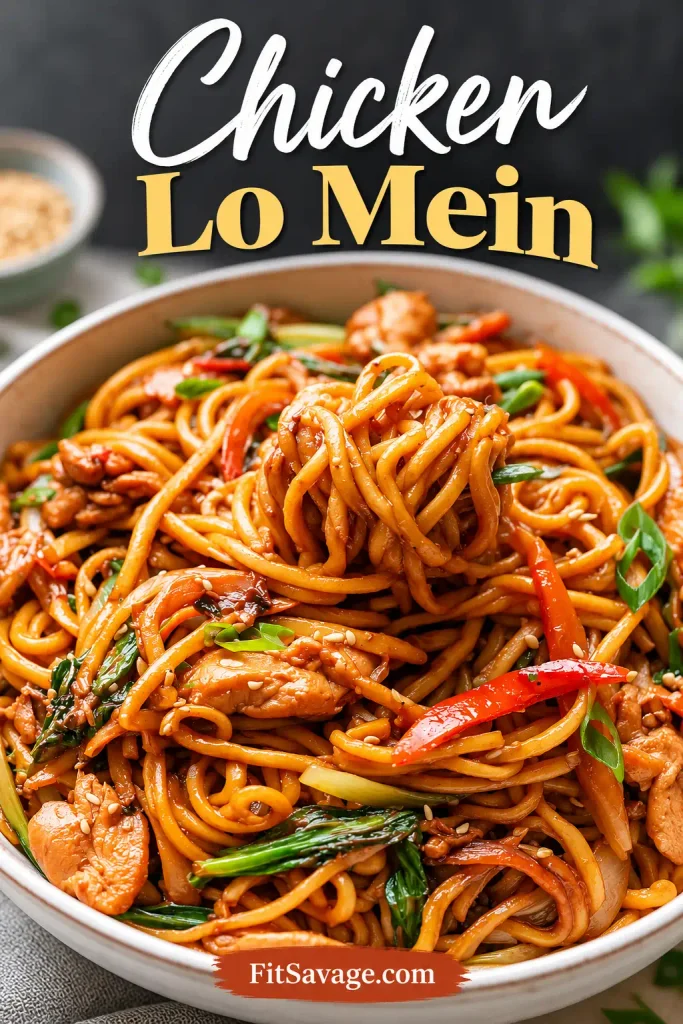
One of the best things about Chicken Lo Mein is how the ingredients come together in a single satisfying meal. The chicken is prepared with a simple marinade that helps keep it tender, while yellow onion, carrot, napa cabbage, celery, and green onions add a mixture of sweetness, freshness, and crunch. Fresh lo mein noodles make the dish especially enjoyable, soaking up the sauce without losing their chewy texture. It’s a practical choice for busy evenings when you want a flavorful dinner that feels more exciting than an ordinary noodle bowl.
Why You’ll Love This Chicken Lo Mein Recipe
- Takeout-style flavor at home: Oyster sauce, soy sauce, dark soy sauce, and sesame oil create a deeply savory coating with just the right touch of sweetness.
- Tender, flavorful chicken: A quick marinade with cornstarch, water, and a little baking soda helps the chicken stay tender as it cooks.
- Colorful vegetables: Carrot, napa cabbage, celery, onion, and green onions contribute different textures and flavors to every bite.
- Satisfying noodles: Fresh lo mein noodles have a pleasantly chewy texture that works beautifully with the rich sauce.
- Flexible preparation: The chicken, vegetables, and sauce ingredients can be prepared before cooking, making the final stir-fry easier to manage.
Preparation and Tools
Before starting, prepare all the ingredients and arrange them near the stove. Stir-frying moves quickly, so having everything ready makes it easier to cook the chicken properly and prevent the vegetables or garlic from overcooking.
You’ll need a large wok or wide skillet, a cutting board, a sharp knife, a small mixing bowl for the chicken marinade, a bowl for the sauce, and tongs or a spatula for tossing the noodles.
Slice the chicken breast into thin, even strips so the pieces cook at a similar rate. Cut the onion into slices, julienne the peeled carrot and celery, and slice the napa cabbage. Cut the green onions into 1-inch pieces, keeping the white and green sections separate because they are added at different stages.
Mince the garlic and measure the sauces, sugar, sesame oil, and cooking oil before heating the pan. If your lo mein noodles require boiling or rinsing according to their package instructions, prepare them as directed and drain them well before adding them to the stir-fry.
Preparation Tips for the Best Results
Slice the chicken evenly. Thin strips cook quickly and mix more easily with the noodles. Cutting the chicken against the grain can also help produce a more tender bite.
Give the chicken time to absorb the marinade. The water, Shaoxing rice wine, salt, baking soda, cornstarch, and neutral oil work together to season and prepare the chicken for stir-frying. Coat every strip thoroughly rather than leaving the marinade pooled at the bottom of the bowl.
Keep the sauce ingredients measured. The oyster sauce and soy sauces provide the savory foundation, while the sugar balances their saltiness. Dark soy sauce contributes a deeper color and a richer-looking finish. Mixing the sauces before cooking makes them easier to distribute evenly.
Prepare the vegetables before heating the wok. Carrot and celery benefit from being cut into thin matchsticks, while the cabbage should be sliced into manageable pieces. Consistent cutting helps the vegetables cook more evenly.
Use a wide, hot cooking surface. A wok is ideal, but a large skillet works too. Avoid crowding the pan, since too many ingredients at once can reduce the heat and cause the chicken and vegetables to steam instead of stir-fry.
Ingredients for Chicken Lo Mein
The ingredients in this recipe each play a specific role in creating the familiar combination of tender meat, springy noodles, crisp vegetables, and savory sauce.
Chicken and Marinade
The recipe uses 8 ounces of skinless, boneless chicken breast, cut into thin strips. Water, optional Shaoxing rice wine, kosher salt, baking soda, cornstarch, and neutral oil make up the marinade. Cornstarch helps coat the chicken, while the baking soda is commonly used in small quantities to help improve the texture of thinly sliced meat.
Shaoxing rice wine adds a subtle depth of flavor, but it is optional. If you don’t have it, you can leave it out without changing the other marinade quantities.
Noodles and Vegetables
Fresh lo mein noodles are the main component, with 16 ounces called for in the recipe. These egg noodles are prized for their chewy texture and ability to hold onto sauce.
Yellow onion adds sweetness, carrot brings a gentle earthy flavor, and napa cabbage softens while retaining some texture. Celery contributes a fresh, slightly crisp bite. Green onions provide a mild onion flavor, with the white portions cooked earlier and the green portions added later for freshness.
Garlic supplies an aromatic base that complements the sauce and vegetables.
Savory Lo Mein Sauce
Oyster sauce provides a concentrated savory flavor, while low-sodium soy sauce contributes saltiness and umami. Dark soy sauce deepens the color, and granulated sugar balances the savory ingredients.
Sesame oil adds a distinctive nutty aroma. The recipe also calls for additional neutral oil for cooking, helping the chicken and vegetables stir-fry without sticking.
How to Make Chicken Lo Mein
Step 1: Marinate the Chicken
Place the thinly sliced chicken breast in a bowl. Add the water, 1 teaspoon of optional Shaoxing rice wine, kosher salt, baking soda, cornstarch, and 1 teaspoon of neutral oil.
Mix thoroughly until the chicken strips are evenly coated. Set the bowl aside while you prepare the remaining ingredients. This short preparation step allows the marinade to coat the meat and helps the chicken develop a tender texture when cooked.
Step 2: Mix the Lo Mein Sauce
In a separate bowl, combine the oyster sauce, low-sodium soy sauce, granulated sugar, and dark soy sauce. Stir until the sugar is distributed throughout the mixture.
Measure the remaining tablespoon of optional Shaoxing rice wine separately so it’s ready when needed. Keep the sesame oil nearby as well. Having these ingredients organized makes it easier to move through the cooking process without leaving the hot pan unattended.
Step 3: Prepare the Noodles and Vegetables
Prepare the 16 ounces of fresh lo mein noodles according to their package directions, if cooking is required. Drain them thoroughly so excess water doesn’t dilute the sauce.
Slice the yellow onion and napa cabbage, julienne the carrot and celery, mince the garlic, and cut the green onions into 1-inch pieces. Separate the white and green sections.
Arrange the prepared ingredients within easy reach of the stove. This organization is especially helpful because the vegetables and noodles will be combined quickly once the chicken is cooked.
Step 4: Cook the Chicken
Heat a large wok or skillet over medium-high heat and add some of the 2 tablespoons of neutral cooking oil. Once the pan is hot, add the marinated chicken in a single layer as much as possible.
Cook, stirring as needed, until the strips are cooked through and lightly browned. The exact time will depend on their thickness and the heat of your pan. Avoid adding too much chicken at once; cook in batches if necessary to maintain good contact with the hot surface.
Transfer the cooked chicken to a clean plate and set it aside while you stir-fry the vegetables.
Step 5: Stir-Fry the Vegetables
Add more of the remaining cooking oil to the wok if needed. Add the sliced onion, julienned carrot, celery, and the white portions of the green onions.
Stir-fry until the vegetables begin to soften but still retain some bite. Add the minced garlic and cook briefly, stirring constantly so it becomes fragrant without burning.
Add the sliced napa cabbage and continue stir-frying until it begins to wilt. Keeping the vegetables moving helps distribute the heat and allows them to develop flavor while preserving their individual textures.
Step 6: Combine the Noodles, Chicken, and Sauce
Return the cooked chicken to the wok. Add the prepared lo mein noodles and pour in the sauce mixture.
Use tongs or a spatula to toss everything together, lifting and turning the noodles so the sauce coats them evenly. Add the reserved tablespoon of Shaoxing rice wine during this stage if using it.
Continue cooking until the noodles are hot, the chicken is evenly distributed, and the sauce clings to the ingredients. If the noodles stick, gently loosen them with your utensils rather than stirring aggressively and breaking them.
Step 7: Finish with Sesame Oil and Green Onions
Add the sesame oil and the reserved green portions of the green onions. Toss everything together until evenly combined.
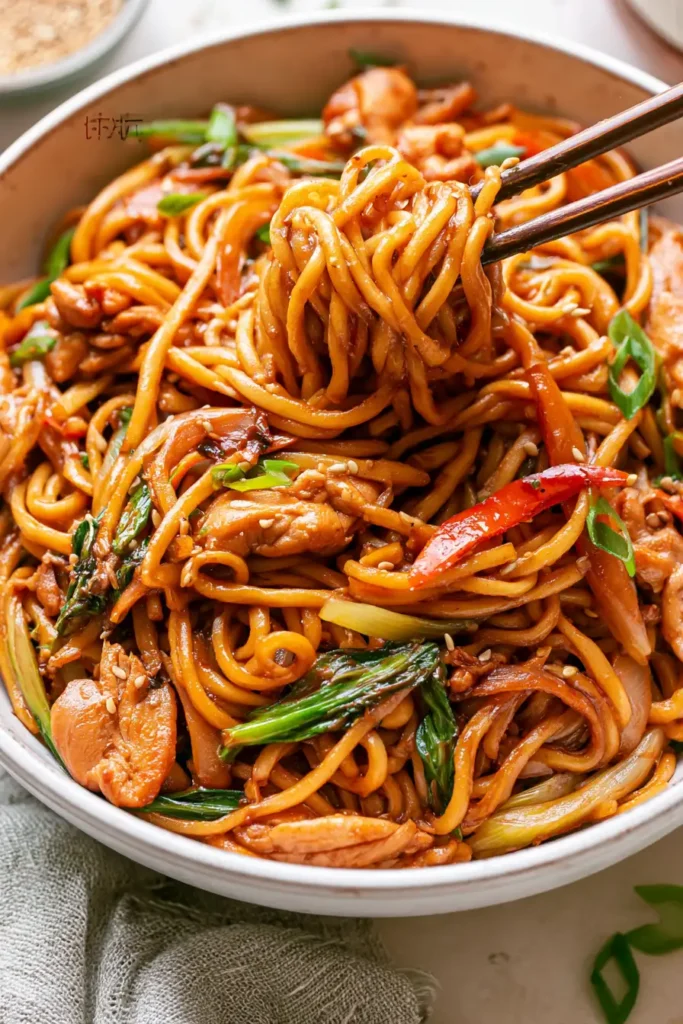
Taste a noodle and check the overall balance. The sauce should taste savory, slightly sweet, and aromatic, with the vegetables still contributing texture. Serve the Chicken Lo Mein while hot for the best noodle texture and flavor.
What to Serve With Chicken Lo Mein
Chicken Lo Mein is a satisfying meal on its own, but a few simple sides can turn it into a complete takeout-style dinner.
- Vegetable spring rolls: Crispy spring rolls add a crunchy contrast to the soft noodles and tender chicken. Serve them with a sweet chili dipping sauce if desired.
- Steamed dumplings: Chicken, pork, or vegetable dumplings pair naturally with the savory soy-based sauce and make the meal feel more substantial.
- Asian cucumber salad: Thinly sliced cucumbers with a light vinegar dressing provide a cool, refreshing contrast to the warm noodles.
- Steamed broccoli: Tender-crisp broccoli adds another vegetable option without competing with the flavors of the lo mein.
- Hot and sour soup: A small bowl of hot and sour soup makes a comforting starter for a Chinese-inspired dinner.
For a simple weeknight meal, serve the noodles by themselves or alongside steamed broccoli. If you’re preparing dinner for guests, spring rolls and dumplings make excellent additions.
Storage Instructions
How to Store Leftover Chicken Lo Mein
Allow the noodles to cool slightly before transferring them to an airtight container. Refrigerate leftovers promptly, ideally within two hours of cooking. Store them in the refrigerator for up to 3–4 days, following standard food-safety guidance.
For the best texture, keep the noodles in a shallow container so they cool evenly. Avoid leaving the finished dish at room temperature for an extended period.
Can You Freeze Chicken Lo Mein?
You can freeze Chicken Lo Mein, although the noodles and vegetables may soften after thawing. Place completely cooled portions in freezer-safe, airtight containers or bags, removing excess air where practical.
For the best quality, use frozen leftovers within approximately 2 months. Thaw them in the refrigerator before reheating. The vegetables may lose some of their original crispness, but the savory sauce should still provide plenty of flavor.
How to Reheat Leftovers
Stovetop method: Add the noodles to a skillet or wok over medium heat with a small splash of water. Toss gently until heated throughout. Add only enough water to loosen the sauce and prevent sticking.
Microwave method: Place a portion in a microwave-safe container and cover loosely. Heat in short intervals, stirring between intervals, until the chicken and noodles are steaming hot throughout.
Avoid reheating the entire batch repeatedly. Warming only the portion you plan to eat helps preserve the texture of the remaining noodles.
Make-Ahead Tips
You can prepare several components in advance to make dinner easier. Slice the chicken, mix the sauce, cut the vegetables, and mince the garlic ahead of time. Store the prepared ingredients in separate covered containers in the refrigerator.
For the best result, cook the noodles and stir-fry the ingredients shortly before serving. The quick cooking process helps the vegetables retain more texture and prevents the noodles from becoming overly soft.
Estimated Nutrition
The nutritional values for Chicken Lo Mein depend on the specific noodles, oyster sauce, soy sauce, and amount of cooking oil used. The estimates below assume the recipe makes 4 servings and that all listed ingredients are divided evenly.
| Nutrient | Estimated amount per serving |
|---|---|
| Calories | 550–700 kcal |
| Protein | 25–35 g |
| Carbohydrates | 75–95 g |
| Fat | 12–22 g |
| Fiber | 4–7 g |
| Sugar | 8–13 g |
| Sodium | 900–1,600 mg |
These figures are approximate rather than laboratory-verified. Actual nutrition may vary considerably by noodle brand, sauce formulation, and how much oil remains in the finished dish. For a more accurate estimate, use the nutrition labels from your specific ingredients and calculate the values based on the final number of servings.
Frequently Asked Questions
Can I use dried noodles instead of fresh lo mein noodles?
Yes. Fresh egg noodles are specified in this recipe, but dried lo mein noodles can be a practical alternative. Cook them according to the package instructions, drain them thoroughly, and avoid overcooking. Slightly firm noodles generally hold up better when tossed with the chicken, vegetables, and sauce.
What is the difference between lo mein and chow mein?
Both dishes commonly feature noodles, vegetables, and a savory sauce, but their preparation and texture differ. Lo mein typically emphasizes tossing cooked noodles with the other ingredients and sauce, resulting in a tender, saucy dish. Chow mein often involves frying the noodles more directly to develop a firmer or crispier texture, depending on the regional style.
Is Shaoxing rice wine necessary?
No. The recipe marks both uses of Shaoxing rice wine as optional. It adds a subtle savory depth, but you can leave it out if you don’t have it. Keep the remaining ingredient quantities unchanged.
Why are my lo mein noodles sticking together?
Noodles may stick if they are overcooked, insufficiently drained, or left sitting for too long before stir-frying. Follow the package directions, drain them well, and toss them with the sauce soon after preparing them. A hot, wide skillet and gentle tossing also help separate the noodles.
Can I prepare Chicken Lo Mein without a wok?
Absolutely. A large, heavy skillet works well. The important thing is to use a pan with enough surface area to cook the chicken and vegetables efficiently. If the pan is crowded, cook the chicken in batches rather than allowing it to release moisture and steam.
How can I keep the vegetables from becoming mushy?
Cut the vegetables into consistent pieces, use sufficiently high heat, and avoid cooking them longer than necessary. Add the garlic after the firmer vegetables have started to soften, then add the napa cabbage and continue tossing until it begins to wilt. The goal is tender vegetables with some remaining bite.
A Delicious Homemade Noodle Dinner
Chicken Lo Mein combines tender chicken, chewy egg noodles, crisp vegetables, and a balanced savory sauce in one satisfying dish. Preparing the ingredients before you start cooking makes the stir-frying process much easier, while the combination of oyster sauce, soy sauce, garlic, and sesame oil creates its signature flavor.
Serve it fresh from the wok for a comforting dinner, or refrigerate the leftovers for a convenient meal later in the week. With a little preparation and a hot pan, this homemade Chicken Lo Mein is a delicious addition to your regular dinner rotation.
Print
Chicken Lo Mein
- Total Time: 35 minutes
- Yield: 4 servings 1x
Description
This Chicken Lo Mein recipe combines tender marinated chicken, chewy fresh egg noodles, crisp vegetables, and a savory homemade sauce made with oyster sauce, soy sauce, dark soy sauce, garlic, and sesame oil. It’s a delicious takeout-style dinner that’s perfect for a satisfying weeknight meal.
Ingredients
For the Chicken Marinade
- 8 ounces skinless boneless chicken breast (cut into thin strips (about 1 chicken breast))
- 1 tablespoon water
- 1 teaspoon Shaoxing rice wine (optional)
- ¼ teaspoon Kosher salt (fine salt is okay too)
- ⅛ teaspoon baking soda
- 2 teaspoons cornstarch
- 1 teaspoon oil (any neutral oil)
For the Sauce
- 3 tablespoons oyster sauce
- 3 tablespoons soy sauce (low sodium)
- 1½ tablespoons granulated sugar
- 1 tablespoons dark soy sauce
For the Noodles and Vegetables
- 16 ounces lo mein noodles (also known as fresh egg noodles (usually 1 pouch))
- ½ small yellow onion (sliced)
- ½ large carrot (peeled and julienned)
- 4 ounces napa cabbage (sliced)
- 1 rib celery (julienned)
- 2 stalks green onion (cut into 1 inch pieces (keep the whites and greens separated))
- 1 tablespoon garlic (minced (about 2 to 3 cloves))
- 1 tablespoon Shaoxing rice wine (optional)
- 2 teaspoon sesame oil
- 2 tablespoons oil (or as needed for cooking (any neutral oil))
Instructions
- Marinate the chicken: Place the thinly sliced chicken breast in a bowl. Add the water, 1 teaspoon Shaoxing rice wine (if using), kosher salt, baking soda, cornstarch, and 1 teaspoon neutral oil. Mix until the chicken is evenly coated.
- Mix the sauce: In a separate bowl, combine the oyster sauce, low-sodium soy sauce, granulated sugar, and dark soy sauce. Stir until the sugar is distributed throughout the mixture. Set aside.
- Prepare the noodles: Prepare the fresh lo mein noodles according to the package instructions, if cooking is required. Drain thoroughly and set aside.
- Prepare the vegetables: Slice the onion and napa cabbage, julienne the carrot and celery, mince the garlic, and cut the green onions into 1-inch pieces. Keep the white and green portions separate.
- Cook the chicken: Heat a large wok or skillet over medium-high heat and add some of the 2 tablespoons of cooking oil. Add the chicken in a single layer and stir-fry until cooked through. Work in batches if needed. Transfer the chicken to a clean plate.
- Stir-fry the vegetables: Add more cooking oil to the wok if needed. Add the onion, carrot, celery, and white portions of the green onions. Stir-fry until they begin to soften. Add the minced garlic and cook briefly until fragrant, stirring constantly. Add the napa cabbage and stir-fry until it begins to wilt.
- Combine everything: Return the cooked chicken to the wok. Add the prepared noodles and the sauce. Add the remaining 1 tablespoon Shaoxing rice wine if using. Toss gently until the sauce coats the noodles, chicken, and vegetables evenly and everything is heated through.
- Finish and serve: Add the sesame oil and green portions of the green onions. Toss to combine and serve hot.
Notes
- Shaoxing rice wine is optional in both places it appears in the recipe. It can be omitted if unavailable.
- Prepare the vegetables and sauce before heating the wok so the ingredients can be added quickly during stir-frying.
- Use a large wok or skillet and cook the chicken in batches if necessary to avoid overcrowding the pan.
- Prep Time: 20 minutes
- Cook Time: 15 minutes
- Category: Recipes
- Method: Stovetop
- Cuisine: Chinese-inspired
Nutrition
- Serving Size: ¼ of the finished recipe
- Calories: 625 kcal (estimated per serving)
- Sugar: 11 g (estimated per serving)
- Sodium: 1,250 mg (estimated per serving)
- Fat: 18 g (estimated per serving)
- Saturated Fat: 3 g (estimated per serving)
- Unsaturated Fat: 14 g (estimated per serving)
- Trans Fat: 0 g (estimated per serving)
- Carbohydrates: 85 g (estimated per serving)
- Fiber: 5 g (estimated per serving)
- Protein: 29 g (estimated per serving)
- Cholesterol: 55 mg (estimated per serving)
Keywords: Chicken Lo Mein, homemade chicken lo mein, chicken lo mein noodles, chicken and vegetable noodles, takeout-style noodles, easy chicken dinner
Leave a Comment