
A Japanese egg sandwich, also known as Tamago Sando, is a simple yet satisfying sandwich made with creamy egg salad tucked between soft, fluffy slices of Japanese milk bread. Each bite combines tender chopped eggs, rich Japanese mayonnaise, a little seasoning, and buttery bread for a delicious balance of flavors and textures.
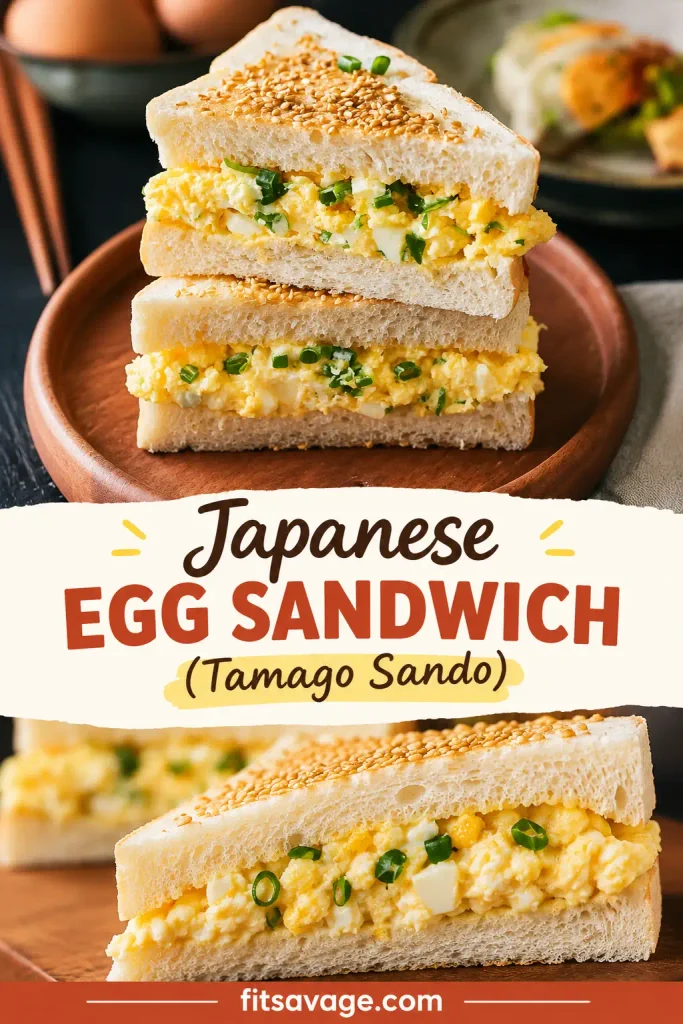
What makes Tamago Sando so appealing is its simplicity. Unlike traditional egg sandwiches that often include crunchy vegetables or strong seasonings, the Japanese version keeps the filling smooth, rich, and delicate. A touch of milk helps create a softer consistency, while Japanese mayonnaise adds a signature creamy flavor. It’s an excellent choice for breakfast, lunch, or a quick afternoon snack.
Why You’ll Love This Japanese Egg Sandwich
- Creamy and flavorful filling: Japanese mayonnaise gives the egg salad a rich, slightly tangy taste that pairs beautifully with the mild flavor of boiled eggs.
- Soft, fluffy bread: Japanese milk bread has a tender texture and subtle sweetness that makes every bite especially enjoyable.
- Simple ingredients: You only need eggs, mayonnaise, basic seasonings, bread, and butter to prepare this sandwich.
- Easy to customize: Adjust the filling’s consistency with a little milk and add sliced chives for a fresh finishing touch.
- Perfect for any time of day: Enjoy it for breakfast, pack it for lunch, or serve it as a light snack.
Preparation and Tools
Before making your Tamago Sando, gather everything you need so the preparation goes smoothly.
Essential equipment:
- Medium saucepan for boiling the eggs.
- Mixing bowl for preparing the egg filling.
- Fork or egg masher for breaking down the cooked eggs.
- Sharp knife for slicing the sandwiches.
- Spatula or butter knife for spreading the filling and softened butter.
- Measuring spoons for accurate seasoning.
Preparation:
Start by bringing the eggs to room temperature if they have been refrigerated. This can help them warm more evenly during cooking.
Allow the unsalted butter to soften before spreading it onto the bread. Cold butter can tear delicate milk bread, while softened butter spreads easily in a thin, even layer.
Measure the Japanese mayonnaise, sugar, salt, and black pepper before mixing the filling. If you’re using milk, keep it nearby so you can adjust the consistency gradually.
Preparation Tips for the Best Tamago Sando
Choose good-quality Japanese milk bread. Shokupan, or Japanese milk bread, is especially suitable for this sandwich because of its soft crumb and slightly sweet flavor. Avoid bread that is too dry or dense, as it won’t provide the same delicate texture.
Don’t overwork the eggs. Mash the cooked eggs until they reach your preferred consistency. A slightly textured filling gives the sandwich a pleasant homemade feel, while finer mashing creates a smoother egg salad.
Add milk gradually. The optional milk helps loosen the filling, but adding too much can make it watery. Start with one teaspoon and add more only if needed.
Use Japanese mayonnaise. Japanese mayonnaise contributes a distinctive creamy, tangy flavor. It is an important ingredient in achieving the familiar Tamago Sando taste.
Spread softened butter gently. A thin layer on the bread adds richness without overwhelming the egg filling. It also creates a delicious contrast with the creamy center.
Ingredients for Japanese Egg Sandwich
Each ingredient contributes to the sandwich’s signature soft texture and balanced flavor.
- 6 large Pete and Gerry’s Organic Eggs: The main ingredient in the filling. Large eggs provide plenty of tender egg whites and rich yolks, creating the foundation of the sandwich.
- 1/4 teaspoon sugar: Adds a subtle sweetness that balances the savory seasonings and creamy mayonnaise.
- 1/4 teaspoon salt: Enhances the natural flavor of the eggs and brings the filling together.
- 1/4 teaspoon ground black pepper: Provides a mild peppery note without overpowering the delicate flavor.
- 1 to 2 teaspoons milk or plant milk (optional): Helps adjust the consistency of the egg mixture, making it softer and easier to spread.
- 4 tablespoons Japanese mayonnaise: Creates the rich, creamy texture that makes Japanese egg salad so distinctive.
- 4 slices Japanese milk bread: Forms the soft exterior of the sandwich. Its delicate crumb complements the creamy filling.
- 2 tablespoons unsalted butter, softened: Adds a smooth, buttery layer to the bread.
- Sliced chives (optional, for garnish): Bring a fresh, mild onion flavor and a little color to the finished sandwich.
How to Make Japanese Egg Sandwich (Tamago Sando)
Step 1: Cook the Eggs
Place the six large eggs in a saucepan and add enough water to cover them. Bring the water to a boil, then cook the eggs until hard-boiled.
Once cooked, transfer the eggs to cold water to cool before peeling. This makes them easier to handle and helps prevent the filling from becoming too warm when mixed with the mayonnaise.
Peel the eggs carefully, removing any remaining pieces of shell. Allow excess water to drain from the eggs before moving on to the next step.
Step 2: Prepare the Creamy Egg Filling
Place the peeled eggs in a mixing bowl. Use a fork or egg masher to break them into small pieces.
Add the sugar, salt, and ground black pepper. Mix gently so the seasonings are distributed throughout the eggs.
Add the Japanese mayonnaise and stir until the mixture becomes creamy. If you prefer a softer consistency, add one teaspoon of milk or plant milk. Mix again and add the second teaspoon only if needed.
The finished filling should be creamy enough to spread easily but thick enough to stay inside the bread when the sandwich is cut.
Step 3: Prepare the Japanese Milk Bread
Place the four slices of Japanese milk bread on a clean work surface.
Spread the softened unsalted butter evenly over the bread slices. Use a gentle hand to avoid flattening or tearing the soft bread.
The butter adds a rich flavor that complements the egg filling. Try to spread it close to the edges so each bite has a balanced combination of bread, butter, and egg.
Step 4: Assemble the Sandwiches
Divide the prepared egg filling between two slices of the buttered bread. Spread it evenly, keeping the filling slightly away from the edges to make the sandwiches easier to close.
Place the remaining bread slices on top, with the buttered sides facing inward.
Press the sandwiches gently to help the filling settle. Avoid pressing too firmly, as Japanese milk bread is delicate and can lose its fluffy texture.
Step 5: Slice and Garnish
Using a sharp knife, cut each sandwich into halves. You can cut them diagonally or straight down the middle, depending on how you prefer to serve them.
Wipe the knife between cuts if necessary to keep the edges neat and prevent the creamy filling from smearing.
Finish with sliced chives if desired. Serve the Japanese egg sandwiches fresh while the bread is soft and the filling is creamy.

What to Serve With Japanese Egg Sandwich (Tamago Sando)
Japanese egg sandwiches are filling enough to enjoy on their own, but pairing them with a few simple sides can turn them into a more complete meal.
Here are some delicious serving ideas:
- Japanese potato salad: Its creamy texture and mild sweetness complement the egg filling without overpowering it.
- Fresh fruit: Serve with sliced strawberries, melon, grapes, or mandarin oranges for a refreshing contrast.
- Miso soup: A warm bowl of miso soup makes a comforting addition, especially when serving Tamago Sando for lunch.
- Cucumber salad: Thinly sliced cucumbers with a light dressing add freshness and a crisp texture alongside the soft sandwich.
- Green tea: Japanese green tea is a lovely beverage pairing that balances the richness of the mayonnaise and butter.
For a simple Japanese-inspired lunch, serve the sandwiches with cucumber salad and fresh fruit. If you’re preparing breakfast, a cup of green tea or coffee is all you need.
Storage Instructions
Japanese egg sandwiches are best enjoyed shortly after assembly because Japanese milk bread is particularly soft and the creamy filling tastes freshest when recently prepared.
Refrigeration: Place leftover sandwiches in an airtight container or wrap them individually in plastic wrap. Refrigerate promptly and consume within 1–2 days. Keep them chilled rather than leaving them at room temperature for extended periods because the filling contains cooked eggs and mayonnaise.
Freezing: Freezing assembled Tamago Sando is not recommended. The egg filling can become watery or change texture after thawing, while the soft bread may lose its delicate consistency.
Make-ahead preparation: You can prepare the hard-boiled eggs ahead of time and refrigerate them until you’re ready to make the filling. For the best texture, mix the egg salad and assemble the sandwiches closer to serving time.
Serving leftovers: Enjoy refrigerated sandwiches cold. If the bread feels slightly firm after chilling, allow the sandwich to sit briefly at room temperature before eating, without exceeding safe food-handling limits.
Estimated Nutrition
The following nutrition information is an estimate based on the supplied ingredients and an assumed yield of two sandwiches, with one sandwich considered one serving.
- Calories: Approximately 590 kcal
- Protein: 25 g
- Carbohydrates: 39 g
- Fat: 37 g
- Saturated Fat: 13 g
- Sugar: 7 g
- Fiber: 2 g
- Sodium: 760 mg
- Cholesterol: 590 mg
Actual values may vary depending on the size of the bread slices, the specific Japanese mayonnaise used, and whether optional milk and chives are included.
Frequently Asked Questions
What is a Japanese egg sandwich called?
A Japanese egg sandwich is called Tamago Sando. It is a popular Japanese sandwich made with creamy egg salad between slices of soft Japanese milk bread, also known as shokupan.
Can I use regular mayonnaise instead of Japanese mayonnaise?
Yes. Regular mayonnaise can be used if Japanese mayonnaise isn’t available. However, the flavor may be slightly different. Japanese mayonnaise generally has a richer, tangier taste that gives Tamago Sando its characteristic flavor.
Can I make Tamago Sando without milk?
Absolutely. Milk is optional in this recipe. The egg filling will still be creamy thanks to the Japanese mayonnaise. Simply leave it out if you prefer a thicker filling.
Why is Japanese milk bread used for Tamago Sando?
Japanese milk bread has a soft, fluffy texture and a subtle sweetness that pairs particularly well with the savory egg filling. Its delicate crumb also makes the sandwich easy to bite into without overwhelming the filling.
Can I prepare the egg filling ahead of time?
Yes. You can prepare the egg filling ahead of serving and store it in an airtight container in the refrigerator. For the freshest sandwich, assemble it with the bread closer to serving time.
Should I remove the crusts?
Removing the crusts is optional. Some Japanese-style egg sandwiches are served with their crusts removed for a softer, more delicate presentation. You can leave them on if you prefer less food waste and a slightly firmer edge.
Conclusion
Japanese Egg Sandwich (Tamago Sando) is a delicious way to enjoy everyday ingredients in a simple, satisfying meal. Creamy eggs, Japanese mayonnaise, and soft milk bread come together to create a sandwich that’s rich, tender, and full of comforting flavor. Serve it for breakfast, pack it for lunch, or enjoy it as an afternoon snack whenever you’re craving something easy and delicious.
Print
Japanese Egg Sandwich (Tamago Sando)
- Total Time: 25 minutes
- Yield: 2 servings 1x
- Diet: Vegetarian
Description
This Japanese Egg Sandwich (Tamago Sando) features creamy seasoned eggs mixed with Japanese mayonnaise and tucked between soft, fluffy slices of Japanese milk bread. A simple and satisfying choice for breakfast, lunch, or a snack.
Ingredients
- 6 large Pete and Gerry’s Organic Eggs
- 1/4 teaspoon sugar
- 1/4 teaspoon salt
- 1/4 teaspoon ground black pepper
- 1 to 2 teaspoons milk (or plant milk, optional)
- 4 tablespoons Japanese mayonnaise
- 4 slices Japanese milk bread
- 2 tablespoons unsalted butter, softened
- Sliced chives (optional, for garnish)
Instructions
- Place the eggs in a saucepan, cover with water, and bring to a boil. Cook until hard-boiled.
- Transfer the cooked eggs to cold water. Allow them to cool, then peel carefully.
- Place the peeled eggs in a mixing bowl and mash them with a fork or egg masher.
- Add the sugar, salt, black pepper, and Japanese mayonnaise. Mix until creamy.
- Add 1 teaspoon of milk or plant milk if desired. Add the second teaspoon only if needed to achieve your preferred consistency.
- Spread the softened unsalted butter evenly over the four slices of Japanese milk bread.
- Divide the egg filling between two slices of bread and spread evenly.
- Place the remaining bread slices on top, with the buttered sides facing inward. Press gently.
- Cut each sandwich in half using a sharp knife.
- Garnish with sliced chives if desired and serve.
Notes
- Add milk gradually to prevent the egg filling from becoming too thin.
- Japanese mayonnaise gives the filling its characteristic creamy, tangy flavor.
- For the freshest texture, prepare the egg filling ahead if desired but assemble the sandwiches shortly before serving.
- Prep Time: 15 minutes
- Cook Time: 10 minutes
- Category: Recipes
- Method: Stovetop
- Cuisine: Japanese
Nutrition
- Serving Size: 1 serving
- Calories: 590 kcal
- Sugar: 7 g
- Sodium: 760 mg
- Fat: 37 g
- Saturated Fat: 13 g
- Unsaturated Fat: 22 g
- Trans Fat: 0 g
- Carbohydrates: 39 g
- Fiber: 2 g
- Protein: 25 g
- Cholesterol: 590 mg
Keywords: Japanese egg sandwich, Tamago Sando, Japanese egg salad sandwich, egg sandwich with Japanese mayonnaise, Japanese milk bread sandwich
Leave a Comment