
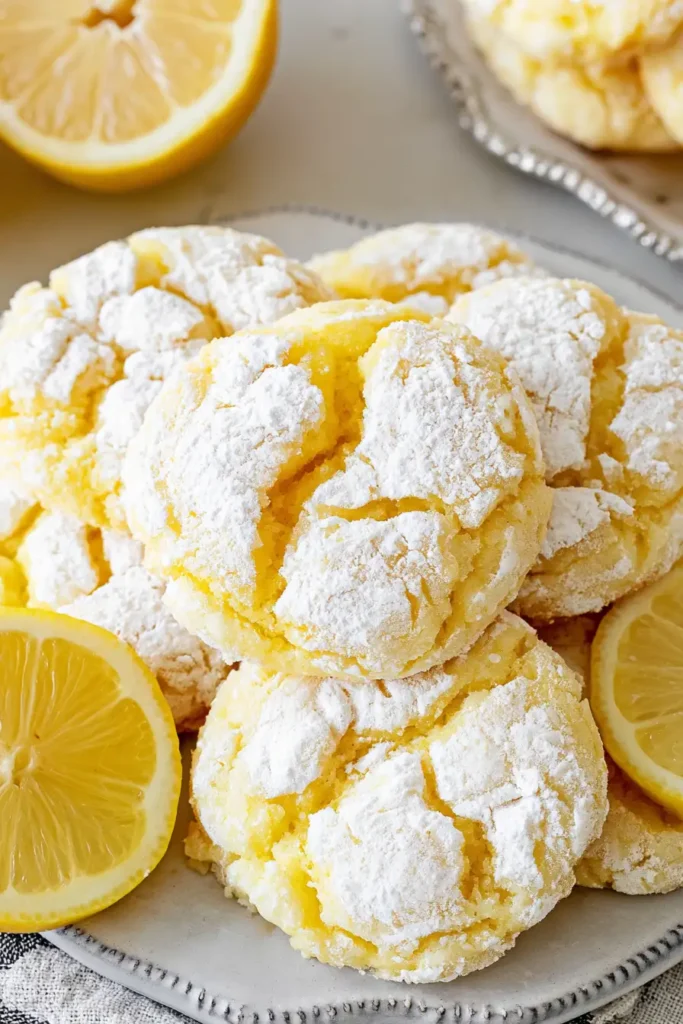
Lemon crinkle cookies are a lovely treat for anyone who enjoys the bright, refreshing taste of lemon in a soft, sweet cookie. They have a tender center, lightly crisp edges, and a beautiful powdered sugar coating that develops the signature crinkled appearance as the cookies bake. Every bite brings together the sweetness of sugar with the fresh citrus flavor of lemon juice and zest.

These cookies are a wonderful choice for spring gatherings, afternoon snacks, holiday cookie trays, or a simple homemade dessert to enjoy with a cup of tea or coffee. The dough uses familiar baking ingredients, and the yellow food coloring is entirely optional, so you can make the cookies with a naturally pale appearance or give them a brighter lemon-inspired color. With their snowy white coating and cheerful citrus flavor, lemon crinkle cookies look just as inviting as they taste.
Why You’ll Love This Recipe
- Bright lemon flavor: Fresh lemon juice and zest give the cookies a pleasant citrus taste that balances their sweetness.
- Soft, tender centers: Butter and the right balance of dry ingredients help create a satisfying cookie texture.
- Beautiful crinkle finish: Rolling the dough in granulated sugar and powdered sugar gives the cookies their distinctive cracked coating.
- Simple baking ingredients: Flour, butter, sugar, egg, and a few pantry staples form the base of this recipe.
- Optional yellow coloring: A few drops of food coloring can enhance the sunny appearance without being essential to the recipe.
- Perfect for sharing: Their attractive finish makes these cookies suitable for dessert platters, bake sales, parties, and homemade gifts.
Preparation and Tools
Before starting, measure the ingredients and allow the butter to soften. Softened butter should yield slightly when pressed but should not look melted or greasy. This helps it combine smoothly with the sugar and creates a more consistent cookie dough.
You’ll need a few basic kitchen tools:
- Mixing bowls: Use one for the dry ingredients and another for combining the butter, sugar, and wet ingredients.
- Whisk: Helpful for evenly distributing the flour, baking soda, and salt.
- Electric mixer or wooden spoon: Either works for creaming the softened butter and sugar.
- Measuring cups and spoons: Accurate measurements help keep the dough balanced.
- Zester and citrus juicer: These make preparing fresh lemon zest and juice easier.
- Baking sheet: Provides a flat surface for the cookies to spread and bake.
- Parchment paper: Helps prevent sticking and makes cleanup easier.
- Two small bowls: One for the granulated sugar coating and another for the powdered sugar.
- Cookie scoop or tablespoon: Helps divide the dough into evenly sized portions.
Read through the instructions before mixing. Preparing the sugar coatings and lining the baking sheet ahead of time makes the rolling process easier, especially when handling several cookies at once.
Preparation Tips for the Best Lemon Crinkle Cookies
Use fresh lemon juice and zest
Fresh lemon juice supplies the recipe’s citrus flavor, while the zest contributes fragrant lemon oils that make the aroma more pronounced. When zesting the lemon, remove only the thin yellow outer layer. The white pith underneath can taste bitter.
Measure the juice and zest carefully. The recipe calls for 2 tablespoons of lemon juice and 1 teaspoon of lemon zest, so there’s no need to add extra lemon juice in an attempt to make the cookies more flavorful. Too much liquid can change the consistency of the dough.
Start with properly softened butter
Butter that is too cold may be difficult to combine evenly with the sugar, while melted butter can change how the cookies spread. Let the butter soften at room temperature until it is pliable but still holds its shape.
If the butter becomes oily or partially melted, allow it to cool and firm up before using it.
Measure the flour carefully
Too much flour can make the cookies dry or dense rather than tender. Spoon the flour into your measuring cup and level the top instead of packing it down. If you use a kitchen scale, weighing the flour according to your preferred baking conversion can provide more consistent results.
Mix the dry ingredients together before adding them to the wet mixture. This distributes the baking soda and salt throughout the flour and helps avoid concentrated pockets in the finished cookies.
Prepare both sugar coatings
This recipe uses two kinds of sugar for rolling: 1/4 cup of granulated sugar and 3/4 cup of powdered sugar. The granulated sugar provides an initial coating, while the powdered sugar creates the familiar white, cracked exterior.
Keep the sugars in separate bowls. Roll each portion of dough in granulated sugar first, followed by a generous coating of powdered sugar, so the cookies have a clearly visible crinkle finish.
Keep the optional coloring simple
The 5–8 drops of yellow food coloring are optional. Add them to the wet mixture if you want a brighter yellow dough, adjusting within the specified amount according to the intensity of your coloring. Without food coloring, the cookies can still have a delicate lemon appearance.
Ingredients for Lemon Crinkle Cookies
Each ingredient has a specific role in the flavor, structure, or appearance of these cookies.
All-purpose flour
The 2 cups of all-purpose flour provide the structure that holds the cookies together. Measuring it accurately helps the dough maintain a workable consistency and prevents the finished cookies from becoming overly firm.
Baking soda and salt
The 1 teaspoon of baking soda helps the cookies rise and spread as they bake. The 1/4 teaspoon of salt balances the sweetness and complements the citrus flavor.
Butter and granulated sugar
The 1/2 cup of softened butter adds richness and contributes to the tender texture. The main 1 cup of sugar sweetens the dough and combines with the butter to form its base. Keep the additional 1/4 cup of sugar separate for rolling the dough.
Egg
One large egg helps bind the ingredients and contributes moisture and structure. Using a large egg keeps the proportions consistent with the recipe.
Lemon juice and lemon zest
The 2 tablespoons of lemon juice bring a fresh citrus tang, while 1 teaspoon of lemon zest adds aromatic depth. Together, they give the cookies their characteristic lemon flavor.
Vanilla extract
The 1/2 teaspoon of vanilla extract rounds out the lemon flavor with a gentle sweetness. It supports the citrus without overpowering it.
Yellow food coloring
The recipe allows 5–8 drops of yellow food coloring, but this ingredient is optional. It affects the color rather than providing the essential lemon flavor.
Powdered sugar
The 3/4 cup of powdered sugar creates the soft, snowy coating associated with crinkle cookies. Its fine texture clings to the dough and highlights the cracks that develop during baking.
How to Make Lemon Crinkle Cookies
Step 1: Combine the dry ingredients
In a mixing bowl, whisk together the 2 cups of all-purpose flour, 1 teaspoon of baking soda, and 1/4 teaspoon of salt. Whisk until the ingredients appear evenly distributed, then set the bowl aside.
Mixing these ingredients separately helps distribute the leavening agent throughout the flour. This is a small but useful step for achieving cookies with a consistent texture.
Step 2: Cream the butter and sugar
In a separate large bowl, combine the 1/2 cup of softened butter and 1 cup of granulated sugar. Beat with an electric mixer or mix thoroughly with a wooden spoon until the mixture is well combined and creamy.
Scrape down the sides of the bowl as needed so the butter and sugar mix evenly. The butter should be soft enough to blend without leaving large lumps.
Step 3: Add the egg, lemon, and vanilla
Add the large egg, 2 tablespoons of lemon juice, 1 teaspoon of lemon zest, and 1/2 teaspoon of vanilla extract to the butter mixture.
Mix until the ingredients are combined and the mixture looks reasonably uniform. If using yellow food coloring, add 5–8 drops at this stage and mix until the color is evenly distributed.
The mixture may look slightly different in texture after the lemon juice is added. Focus on combining the ingredients evenly rather than beating the mixture excessively.
Step 4: Mix in the dry ingredients
Gradually add the flour mixture to the wet ingredients, stirring until a cohesive cookie dough forms. Scrape the sides and bottom of the bowl to incorporate any remaining dry ingredients.
Stop mixing once the flour has been incorporated. Overmixing can develop excess gluten, which may make the cookies firmer than intended.
The finished dough should hold together well enough to portion and roll. If it feels unusually soft, chilling it briefly may make handling easier, although the recipe does not specify a mandatory chilling period.
Step 5: Prepare the sugar coatings
Place the remaining 1/4 cup of granulated sugar in one small bowl. Put the 3/4 cup of powdered sugar in another.
Line a baking sheet with parchment paper. Keeping the prepared sheet nearby allows you to transfer each coated dough portion directly to the baking surface.
Step 6: Roll the dough in sugar
Portion the dough into evenly sized balls using a cookie scoop or tablespoon. Roll each ball first in the granulated sugar, then generously in the powdered sugar.
Make sure the outside is well coated in powdered sugar. The coating helps create the distinctive contrast between the white exterior and the cracks that reveal the cookie underneath.
Arrange the coated dough balls on the prepared baking sheet, leaving enough room between them for spreading. Avoid crowding the sheet, as cookies that touch can lose their rounded shape.
Step 7: Bake until the cookies are set
Bake the cookies in an oven preheated to the temperature specified by your complete recipe instructions, until the edges are set and the surfaces develop their characteristic cracks.
The supplied ingredient list does not include an oven temperature or baking time, so those details should be confirmed from the original recipe rather than guessed. Check the cookies visually as they bake and avoid leaving them in the oven until they become deeply browned if a soft center is the goal.
The cookies may still feel delicate when first removed from the oven. This is normal for many soft cookies, and they will become easier to handle as they cool.
Step 8: Cool before serving
Allow the cookies to rest on the baking sheet briefly after baking so they can firm up. Transfer them carefully to a cooling rack when stable enough to move.
Let them cool before stacking or storing them. The powdered sugar coating looks most attractive when the cookies have cooled and their surfaces are no longer warm and delicate.
Recipe Notes
- For a stronger lemon aroma: Use the specified fresh lemon zest and avoid including the bitter white pith when zesting.
- For a brighter color: Add the optional yellow food coloring to the wet ingredients before mixing in the flour.
- For easier handling: If the dough is too soft to roll neatly, chill it briefly and check whether it becomes easier to portion.
- For a snowy finish: Coat the dough generously in powdered sugar after rolling it in granulated sugar.
- For even baking: Keep the dough portions similar in size and leave space between them on the baking sheet.
Common Mistakes to Avoid
Adding too much flour
Excess flour can produce dry, heavy cookies. Measure carefully and avoid compressing the flour into the measuring cup. Mix only until the dough comes together.
Using melted butter
Melted butter can affect the dough’s consistency and cause the cookies to spread differently. Start with softened butter that remains solid and pliable.
Using too much lemon juice
More lemon juice does not automatically mean better lemon cookies. The recipe already balances 2 tablespoons of juice with 1 teaspoon of zest. Adding extra liquid can make the dough softer and affect the finished texture.
Skimping on the powdered sugar
A thin coating may produce a less noticeable crinkle appearance. Roll each dough ball thoroughly in powdered sugar, covering the surface before placing it on the baking sheet.
Overmixing the dough
Once the dry ingredients are incorporated, stop mixing. Excessive mixing can make the texture tougher than desired.
Moving the cookies too soon
Freshly baked cookies can be fragile. Allow them to settle on the baking sheet before transferring them to a rack, which helps reduce breakage and preserve their shape.
What to Serve With Lemon Crinkle Cookies
Lemon crinkle cookies have a sweet citrus flavor that pairs well with warm drinks, fresh fruit, and other simple treats. Their powdered sugar coating also makes them a pretty addition to dessert platters.
- Hot tea: Serve the cookies with black tea, Earl Grey, or chamomile. Their gentle flavors complement the lemon without overwhelming it.
- Coffee or cappuccino: The slightly bitter notes of coffee balance the sweetness of the cookies, making this combination ideal for an afternoon break.
- Fresh berries: Strawberries, blueberries, and raspberries provide a fruity accompaniment that works naturally with the lemon flavor.
- Vanilla ice cream: Enjoy a cookie alongside a scoop of vanilla ice cream for a simple dessert with contrasting temperatures and textures.
- Lemonade or iced tea: For a refreshing warm-weather treat, pair the cookies with a chilled drink that complements their citrus notes.
- A mixed cookie platter: Arrange them with sugar cookies, chocolate chip cookies, or shortbread for a varied selection at parties and family gatherings.
For a simple presentation, place the cooled cookies on a serving plate and dust them lightly with additional powdered sugar only if needed. Their existing crinkle coating usually provides plenty of visual appeal.
Storage Instructions
How to Store Lemon Crinkle Cookies
Allow the cookies to cool completely before storing them. Warm cookies can create condensation inside a container, which may soften the powdered sugar coating and affect their texture.
Place the cooled cookies in an airtight container and keep them at room temperature in a cool, dry location. For the best quality, enjoy them within 3–5 days. Store them in a single layer when possible, or separate layers with parchment paper to help protect the delicate coating.
Keep the container away from direct sunlight and sources of heat. If the cookies are stacked, handle them gently to prevent cracking or rubbing away the powdered sugar.
Can You Refrigerate Lemon Crinkle Cookies?
Refrigeration generally isn’t necessary for these cookies when they are fully baked and stored properly. An airtight container at room temperature is usually the better choice for preserving their tender texture.
If you live in a particularly hot or humid environment, choose the coolest dry place available and keep the container tightly closed. Humidity can make the powdered sugar coating absorb moisture and become less distinct.
Can You Freeze Lemon Crinkle Cookies?
Yes. Once completely cooled, the baked cookies can be frozen in a freezer-safe airtight container. Place parchment paper between layers to reduce sticking and protect the coating.
For the best quality, use them within about 2 months. Thaw the cookies at room temperature in their container, then open it once they have thawed. This helps limit sudden moisture exposure on the cookie surfaces.
The powdered sugar coating may not look quite as fresh after freezing and thawing, but the cookies can still be enjoyable.
Can You Make the Dough Ahead?
You can prepare the dough ahead of time if you need to divide the work between two days. Place the dough in a covered container and refrigerate it, then check its firmness before portioning.
Chilled dough may be firmer and easier to roll, but it may also need a little time at room temperature to become workable. If the dough becomes sticky as it warms, return it to the refrigerator briefly.
For the most recognizable white crinkle finish, roll the dough balls in the granulated sugar and powdered sugar shortly before baking rather than coating them far in advance.
How to Refresh Stored Cookies
These cookies are best enjoyed at room temperature. If they have been stored in an airtight container, simply remove the desired portion and let it sit briefly before serving.
Avoid heating them for too long, as that can dry out the centers. If you choose to warm a cookie, use a very short interval and check its texture before heating it further.
Estimated Nutrition
The following figures are approximate estimates for one cookie, assuming a batch of around 24 similarly sized cookies. The actual yield and nutritional values will vary depending on the size of the dough portions, the amount of coating that adheres, and the specific ingredients used.
| Nutrient | Estimated amount per cookie |
|---|---|
| Calories | 120–140 kcal |
| Carbohydrates | 20–23 g |
| Protein | 1–2 g |
| Fat | 4–5 g |
| Saturated fat | 2–3 g |
| Sugar | 12–15 g |
| Fiber | Less than 1 g |
| Sodium | 60–100 mg |
These values are estimates, not laboratory measurements. The supplied recipe does not specify the final yield or the exact amount of sugar that remains on the cookies after coating, so the figures should be treated as a general guide rather than precise nutrition information.
Frequently Asked Questions
Why didn’t my lemon crinkle cookies develop cracks?
Cracks form as the cookie dough expands during baking while the exterior coating develops a surface crust. If the cookies have only a few cracks, possible factors include the dough consistency, the amount of powdered sugar on the outside, or differences in oven conditions.
Make sure the dough balls have a generous coating of powdered sugar and that your oven is properly preheated to the temperature specified in the original recipe. Avoid changing the ingredient proportions to force more cracking, since that can affect the texture.
Can I make lemon crinkle cookies without food coloring?
Yes. The yellow food coloring is optional and can be omitted entirely. The lemon juice and zest still provide the citrus flavor, while the powdered sugar creates the characteristic white exterior.
The inside may look more naturally pale than bright yellow, but the cookies can still have their familiar crinkled appearance.
Can I use bottled lemon juice instead of fresh lemon juice?
Fresh lemon juice is preferable because it offers a bright citrus flavor, particularly when paired with freshly grated zest. Bottled lemon juice may be used if necessary, but the flavor can vary by brand.
The zest is especially useful in this recipe because it adds aromatic lemon character without requiring additional liquid.
Why is my cookie dough too sticky to roll?
Cookie dough can feel sticky because of the moisture from the egg and lemon juice, the temperature of the butter, or the conditions in your kitchen. First, make sure the ingredients were measured accurately.
If the dough is difficult to handle, refrigerate it briefly until it firms up. Avoid adding large amounts of extra flour, since that can make the finished cookies dense and dry.
Can I make smaller or larger cookies?
Yes, you can portion the dough into different sizes, provided you keep the portions reasonably consistent within each batch. Smaller cookies will generally bake more quickly, while larger ones may require additional time.
Because the original recipe details supplied here do not include an oven temperature or baking duration, follow the complete source recipe and watch for visual signs of doneness when changing the cookie size.
How can I keep the powdered sugar coating looking white?
Use a generous coating of powdered sugar and allow the cookies to cool completely before storing them. Moisture and condensation can make the coating look damp or partially disappear.
Store the cookies in a dry, airtight container, and avoid stacking them while they are warm.
A Sweet Finish to Any Day
Lemon crinkle cookies bring together fresh citrus flavor, a tender texture, and a beautiful powdered sugar finish in one simple homemade treat. They’re easy to serve with coffee or tea, attractive enough for a holiday cookie platter, and adaptable enough to make with or without yellow food coloring.
Keep the lemon juice and zest measurements balanced, handle the dough gently, and give each cookie a generous sugar coating. Once cooled, these cheerful cookies are ready to share with family and friends.
Print
Lemon Crinkle Cookies
- Total Time: 27 minutes
- Yield: 27 minutes 1x
- Diet: Vegetarian
Description
These lemon crinkle cookies feature a soft, tender center, fresh lemon flavor, and a beautiful powdered sugar coating. Made with simple baking ingredients, they are a delightful homemade dessert for afternoon treats, celebrations, and cookie platters.
Ingredients
- 2 cups all purpose flour
- 1 teaspoon baking soda
- 1/4 teaspoon salt
- 1/2 cup butter (softened)
- 1 cup sugar
- 1 large egg
- 2 tablespoons lemon juice
- 1 teaspoon lemon zest
- 1/2 teaspoon vanilla extract
- 5–8 drops yellow food coloring (optional)
- 1/4 cup sugar
- 3/4 cup powdered sugar (aka icing sugar or confectioners sugar)
Instructions
- In a mixing bowl, whisk together the flour, baking soda, and salt until evenly combined.
- In a separate large bowl, cream the softened butter with 1 cup of sugar until well combined and creamy.
- Add the egg, lemon juice, lemon zest, and vanilla extract. Mix until combined. If desired, add 5–8 drops of yellow food coloring and mix until evenly distributed.
- Gradually add the dry ingredients to the wet mixture. Mix just until a cohesive cookie dough forms.
- Place the remaining 1/4 cup of granulated sugar in one small bowl and the powdered sugar in another. Prepare a baking sheet.
- Shape the dough into evenly sized balls. Roll each ball first in granulated sugar and then generously in powdered sugar.
- Arrange the coated dough balls on the prepared baking sheet, leaving space between them. Bake in a preheated oven at the temperature and for the duration specified in the original recipe, until the cookies are set and their surfaces develop cracks.
- Let the cookies rest briefly on the baking sheet before carefully transferring them to a cooling rack. Cool completely before serving or storing.
Notes
- Use fresh lemon juice and zest for a bright citrus flavor.
- Yellow food coloring is optional and affects the appearance rather than the essential flavor.
- If the dough is too sticky to handle, chill it briefly before shaping.
- The supplied recipe does not specify the oven temperature, baking time, or yield. Confirm these details before publishing.
- Prep Time: 15 minutes
- Cook Time: 12 minutes
- Category: Recipes
- Method: Baked
- Cuisine: American-inspired
Nutrition
- Serving Size: 1 cookie
- Calories: 120–140 kcal
- Sugar: 12–15 g
- Sodium: 60–100 mg
- Fat: 4–5 g
- Saturated Fat: 2–3 g
- Unsaturated Fat: 2 g
- Trans Fat: 0 g
- Carbohydrates: 20–23 g
- Fiber: 1 g
- Protein: 1–2
Keywords: lemon crinkle cookies, lemon cookies, powdered sugar cookies, lemon sugar cookies, homemade crinkle cookies, easy lemon dessert
Leave a Comment